The Failed Experiment That Saved Millions
Alexander Fleming was trying to grow bacteria cultures for a completely different research project when he noticed something odd in his London laboratory in 1928. One of his petri dishes had been contaminated by mold — the kind of accident that would normally make a scientist curse and start over.
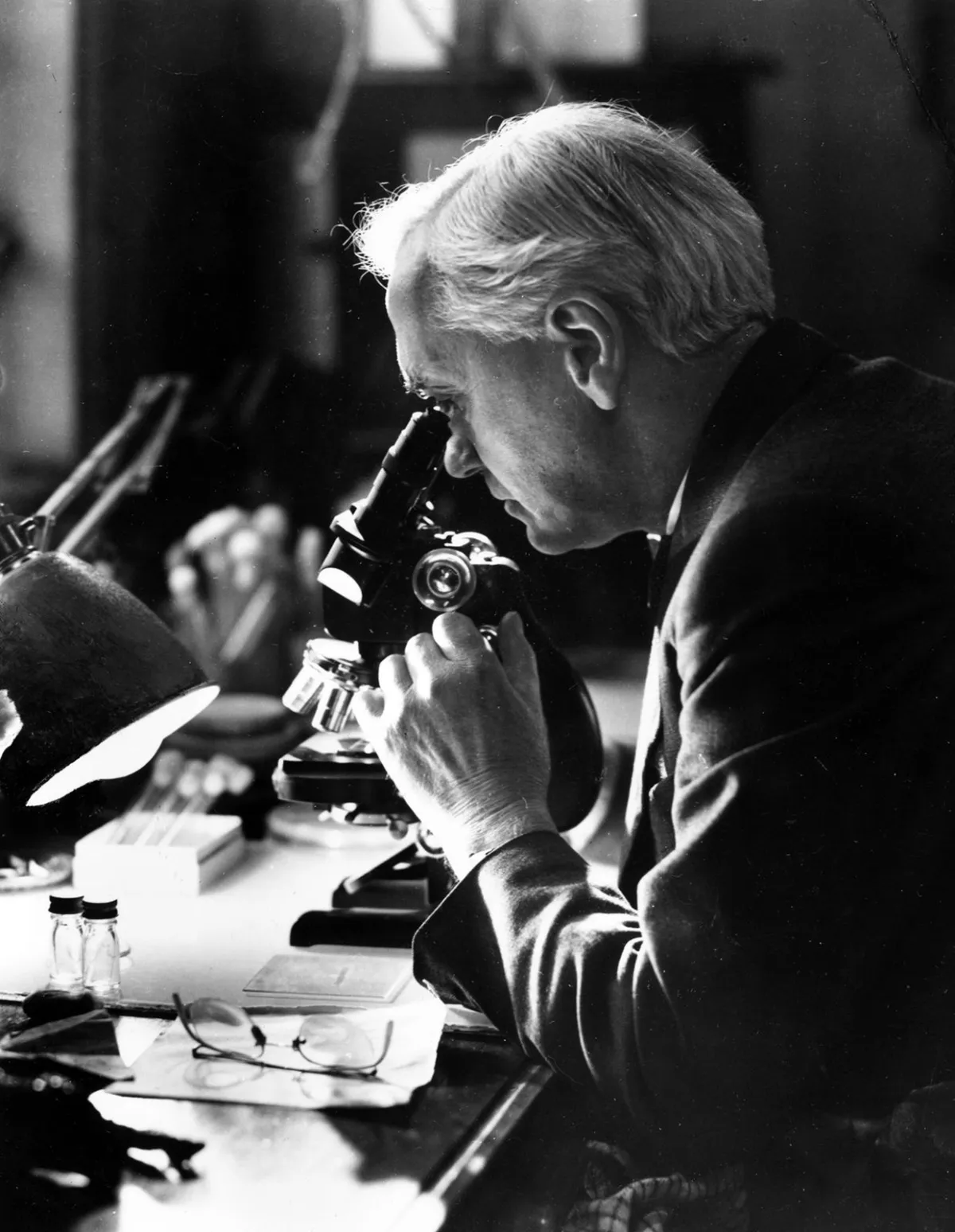 Photo: Alexander Fleming, via cdn.britannica.com
But Fleming was the kind of person who paid attention to accidents. Instead of throwing the dish away, he looked closer and noticed that the bacteria around the mold had died. The mold was producing something that killed harmful bacteria, but Fleming had no idea he was looking at what would become penicillin, the antibiotic that would save more lives than any other medical discovery in history.
He had been trying to understand how the human immune system fights infection. What he accidentally discovered was a way to give that immune system the most powerful ally it had ever had. Sometimes the best discoveries come not from following a plan, but from being curious about why the plan went wrong.
The Pivot That Built an Empire
William Wrigley Jr. came to Chicago in 1891 with $32 and a plan to sell soap. That was it — soap, nothing fancy, just a way to make a living in a city that was growing faster than anyone could keep up with. To encourage sales, he started giving away small premiums with each purchase: baking powder, then chewing gum.
 Photo: William Wrigley Jr., via billionairereporter.com
The soap business was fine, but customers kept asking for more of that free chewing gum. Wrigley was smart enough to notice when his customers were telling him something important. He gradually shifted focus, and by 1893 he was selling more gum than soap. By 1910, his accidental gum company was making him one of the wealthiest men in America.
Wrigley had stumbled onto something profound about American consumer psychology: people wanted small, affordable luxuries that made ordinary moments a little better. He hadn't set out to revolutionize how Americans thought about treats and indulgences, but that's exactly what happened when he stopped trying to sell soap and started paying attention to what people actually wanted.
The Broken Invention That Connected the World
Philo Farnsworth was trying to invent an electronic television system when he ran into a problem that seemed insurmountable. In 1927, his experimental apparatus kept producing images that were distorted, unclear, and basically useless for television broadcasting. Any reasonable person would have gone back to the drawing board.
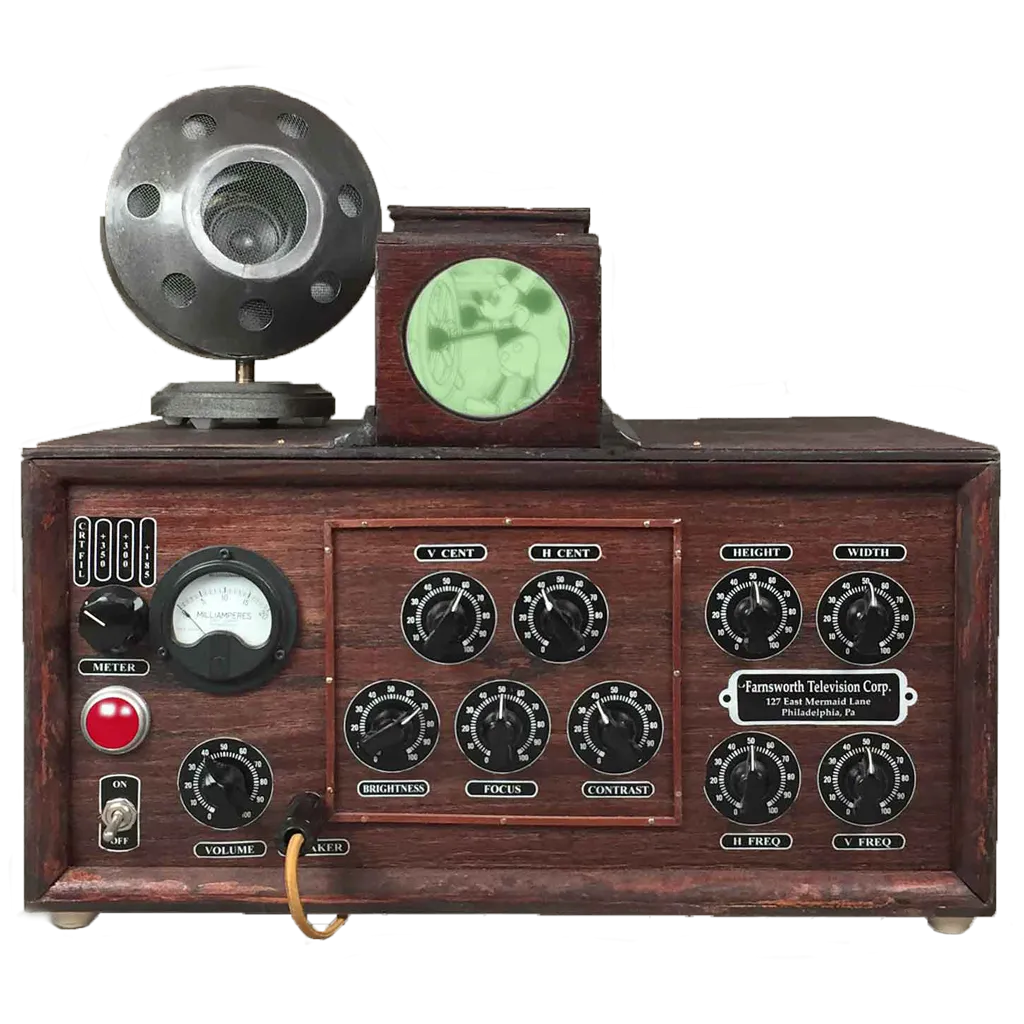 Photo: Philo Farnsworth, via s3.amazonaws.com
But Farnsworth noticed that while the images were terrible for television, the electronic scanning process he had developed was incredibly precise for other applications. What he had accidentally created was the foundation technology for electronic imaging that would eventually enable everything from medical scanners to satellite communication to computer monitors.
He had been trying to bring moving pictures into American living rooms. What he actually invented was the visual language that would define the digital age. His "failed" television experiments became the building blocks for technologies he couldn't have imagined, from MRI machines that see inside the human body to space telescopes that capture images from billions of miles away.
The Wrong Turn That Revolutionized Transportation
Ruth Handler was trying to solve a simple problem in 1959: her daughter Barbara was frustrated with baby dolls because she wanted to play with a doll that looked like a grown-up woman. Handler set out to create a more mature-looking doll, but she kept running into manufacturing problems that made her prototypes too expensive for the average family.
While struggling with production costs, Handler accidentally discovered something much bigger than a new toy design. The manufacturing techniques she developed to make adult-proportioned dolls at affordable prices revolutionized how plastic products were designed and produced. Her innovations in injection molding and articulated joints would eventually influence everything from automotive parts to medical devices.
She had been trying to make one little girl happy with a better doll. What she actually did was help create the modern plastic manufacturing industry. The Barbie doll became a cultural phenomenon, but Handler's real contribution was showing American manufacturers how to make complex plastic products cheaply and efficiently.
The Cooking Mistake That Fed a Nation
Clarence Birdseye was working as a fur trapper in Labrador in 1912 when he made an observation that had nothing to do with his actual job. He noticed that fish caught in the Arctic froze so quickly in the extreme cold that when thawed months later, they tasted almost fresh. It was just an interesting curiosity — until he tried to replicate the process back in New York.
Birdseye spent years trying to perfect rapid-freezing techniques, originally thinking he could create a small business selling premium frozen fish to restaurants. But his experiments kept producing results that were much more significant than he had planned. He had accidentally discovered the principles of flash-freezing that would transform how Americans ate.
What started as a way to preserve fish for a few high-end customers became the foundation of the modern frozen food industry. Birdseye's techniques made it possible for families anywhere in America to eat vegetables, fruits, and proteins that had been harvested thousands of miles away and months earlier, fundamentally changing American nutrition and agriculture.
The Pattern Behind the Accidents
What connects these five stories isn't just luck — it's a particular kind of attention that allows some people to recognize opportunity hiding inside failure. Each of these individuals was curious enough to investigate when things didn't go according to plan, flexible enough to change direction when evidence pointed somewhere unexpected, and brave enough to pursue possibilities that weren't part of their original vision.
They remind us that some of history's most important advances came not from brilliant people executing perfect plans, but from observant people who were willing to follow accidents wherever they led. Sometimes the best way to change the world is to stop trying so hard and start paying attention to what's already happening around you.