Beautiful Wreckage: How Chet Baker Turned a Broken Life Into Immortal Music
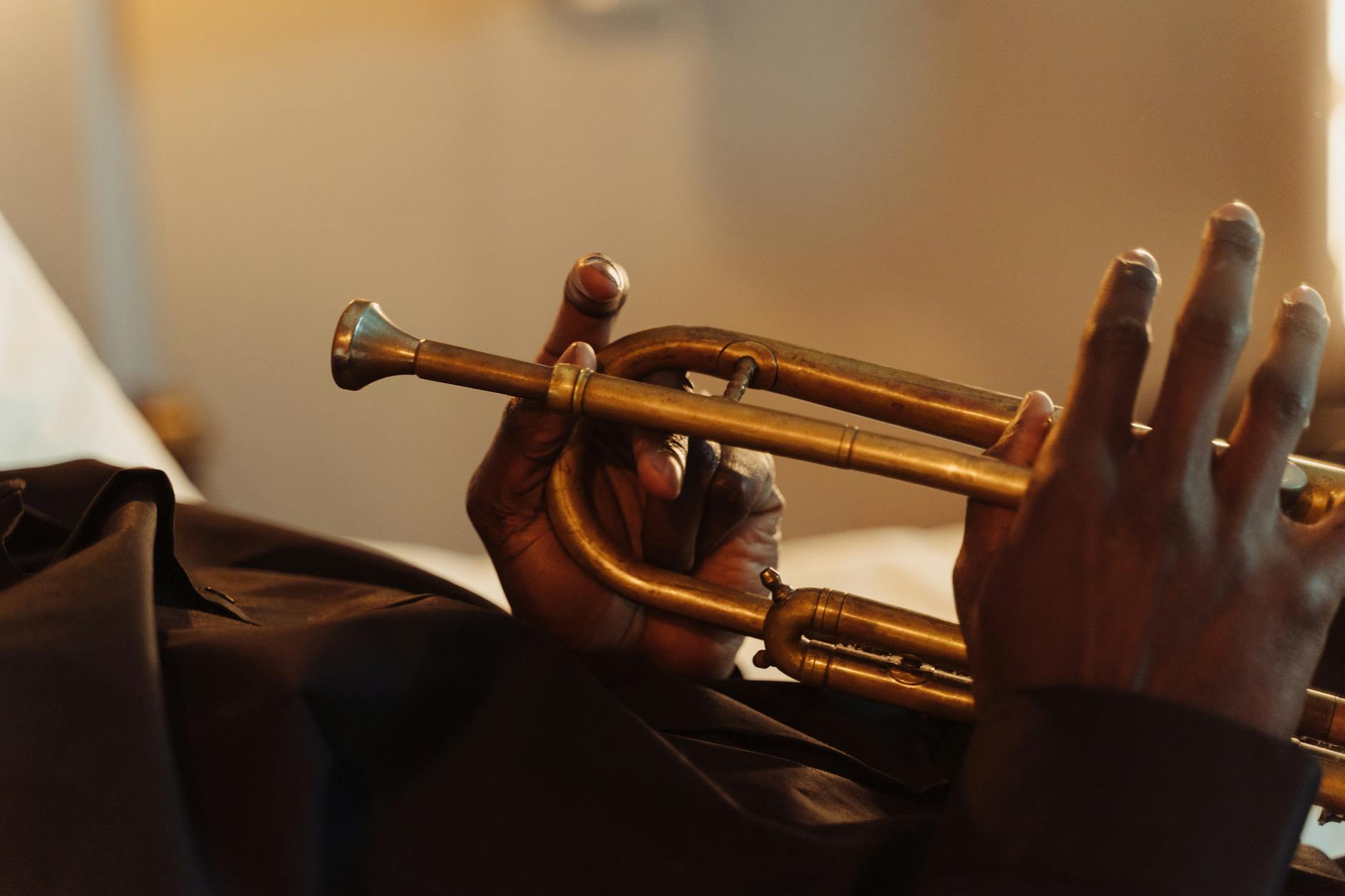
Beautiful Wreckage: How Chet Baker Turned a Broken Life Into Immortal Music
There's a photograph of Chet Baker taken late in his life that stops you cold. His face is carved up by decades of hard living — sunken cheeks, hollowed eyes, the kind of weathering that doesn't come from sunshine. He looks like a man who lost a very long fight. And in many ways, he did.
But put a record on. Close your eyes. Let that trumpet breathe.
Suddenly none of it matters — the arrests, the relapses, the teeth knocked out in a drug deal gone wrong, the years of self-inflicted ruin. What matters is the sound: fragile, aching, impossibly tender. Chesney Henry Baker Jr. was, by almost any measure, a disaster of a human being. He was also one of the most gifted musicians America ever produced. And the uncomfortable truth at the center of his story is that you can't really separate those two things.
Yale? No. Yale Lock Factory.
Baker was born in 1929 in Yale, Oklahoma — not the university, but a small prairie town that had about as much in common with Ivy League ambition as the moon has with Manhattan. His father was a guitarist who drank too much and kept the family perpetually broke. They eventually relocated to California, chasing better luck that never quite arrived.
As a teenager, Baker stumbled into music almost by accident. He joined the Army at fifteen — lying about his age — and it was there, in an Army band, that he first picked up a trumpet seriously. He had no formal training worth mentioning. What he had instead was an ear so freakishly natural that other musicians would later struggle to explain it. He didn't read music the way conservatory students did. He felt it, processed it through some internal frequency the rest of us don't seem to have access to.
After his military stints, Baker drifted. He mopped floors. He worked odd jobs. He sat in on sessions wherever anyone would let him, absorbing bebop and cool jazz in the clubs and rehearsal rooms of Los Angeles. Then, in 1952, everything changed.
The Gig That Rewrote the Rules
Charlie Parker — Bird himself, the towering genius of bebop — came through Los Angeles and needed a trumpet player. Someone pointed him toward this quiet kid from Oklahoma. Parker hired him. That endorsement alone was enough to rearrange the furniture of the jazz world.
But it was his work with pianist Gerry Mulligan's quartet that turned Baker into a genuine phenomenon. The group had no piano — an unusual, almost radical choice at the time — which pushed Baker's trumpet to carry melodic weight it might otherwise have shared. He rose to the challenge with something that sounded less like jazz bravado and more like a conversation happening just for you. Intimate. Unhurried. Devastating in the best possible way.
Then came the voice.
Almost as an afterthought, Baker started singing. He wasn't a trained vocalist. His tone was soft, almost androgynous, with a vulnerability that felt completely unguarded. When he recorded My Funny Valentine in 1954, something happened that's hard to quantify. People didn't just like it. They needed it. The song became his signature — a ballad about loving someone despite their flaws that felt, in his hands, like a confession rather than a performance.
By his mid-twenties, Chet Baker was on magazine covers. Women adored him. Critics fell over themselves. He was being compared to Miles Davis. The world had decided he was the next great thing.
The Long Unraveling
And then heroin.
Baker's addiction wasn't a footnote to his career — it was, in many ways, the central plot. It cost him everything repeatedly and he kept coming back for more. He lost his cabaret card in New York, which meant he couldn't legally perform in clubs. He was arrested in multiple countries. In 1968, dealers beat him so badly in San Francisco that his teeth were knocked out, which should have ended his trumpet career entirely. Embouchure — the way a brass player shapes their mouth against the mouthpiece — is everything. Without it, you can't play.
Baker spent years learning to play again from scratch, rebuilding his technique around the gaps in his mouth. Most people would have quit. Baker just got quieter, more interior, more haunted. And paradoxically, more beautiful.
European audiences embraced him during the years American venues wouldn't touch him. He spent long stretches in Italy, Germany, the Netherlands — places that seemed more willing to separate the art from the wreckage of the artist. He recorded prolifically, sometimes brilliantly, occasionally just for drug money. The quality was uneven. The genius was not.
Amsterdam, 1988
On the morning of May 13, 1988, Chet Baker fell from a window of the Prins Hendrik Hotel in Amsterdam. He was 58 years old. The circumstances were never fully explained — accident, or something else. He had been using the night before. Whatever happened in that room, the fall killed him.
The obituaries were respectful but tinged with tragedy. A wasted talent. A cautionary tale. A man who threw away greatness.
Except history had a different verdict waiting.
In the decades since his death, Baker's reputation hasn't faded — it's deepened. New generations keep finding My Funny Valentine, keep discovering Almost Blue, keep falling into the particular gravity of his sound. His 1955 recordings with strings. His late-career European sessions, raw and unpolished and alive. The music doesn't sound like the product of a ruined man. It sounds like the product of a man who understood ruin better than most of us ever will — and found a way to make it sing.
What the Wreckage Left Behind
There's a version of this story where Chet Baker gets clean at 30, lives to 85, teaches at a conservatory, and gives interviews about discipline and gratitude. Maybe that version exists in some parallel world.
But the music we have — this music — came from the life he actually lived. The longing in his trumpet wasn't manufactured. The fragility in his voice wasn't an artistic choice. It was the sound of a man perpetually on the edge, playing like each note might be the last one he gets right.
Stranger glories have been built from worse foundations. But few have ever sounded quite like this.