
Summer School at the Midway
Clarence Darrow was supposed to be studying law books during those long Ohio summers, but instead he found himself drawn to the traveling carnivals that rolled through small Midwest towns like a promise of something bigger. While other teenage boys were working farms or apprenticing with local tradesmen, Darrow was learning a different kind of education entirely — one that would serve him better in courtrooms than any law school ever could.
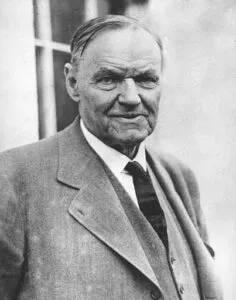 Photo: Clarence Darrow, via firstamendment.mtsu.edu
At 16, he talked his way into a job running the ring toss game at a carnival that had set up outside Kinsman, Ohio. The work was simple enough: convince people to throw rings at bottles, collect their money when they missed, and pay out the occasional small prize to keep hope alive. But what Darrow discovered that first summer was that success had nothing to do with the game itself and everything to do with reading the crowd.
The Art of the Mark
Every person who approached Darrow's booth was a puzzle to be solved. The farmer with calloused hands and suspicious eyes needed a different approach than the town banker looking to impress his wife. The young couple on their first date required different handling than the group of factory workers looking to prove something to each other.
Darrow learned to spot the tells: who had money to burn and who was counting coins, who would walk away after one loss and who would keep playing until their pockets were empty, who needed to be challenged and who needed to be flattered. He developed an instinct for finding each person's particular weakness — their pride, their hope, their need to look good in front of others.
More importantly, he learned how to control the energy of a crowd. When business was slow, he knew how to create excitement that would draw people over. When someone was getting angry about losing, he knew how to defuse the situation with humor or redirect their frustration toward another try. When local authorities started sniffing around, he knew how to make everything look perfectly legitimate.
Reading the Room
Those carnival summers taught Darrow something that most lawyers never learn: how to instantly assess the emotional temperature of a room and adjust accordingly. In court, this translated into an almost supernatural ability to sense which arguments would land with a jury and which would backfire.
When he defended Eugene Debs for his role in the Pullman Strike, Darrow didn't just present legal arguments — he read the twelve men in the jury box like carnival customers. He could see who was sympathetic to workers' rights and who feared social disruption. He knew which jurors needed emotional appeals and which responded better to cold logic. Most importantly, he could sense when he was losing them and pivot accordingly.
The Performance Element
Carnival work is fundamentally about performance, and Darrow carried that showmanship into every courtroom he entered. He understood that trials aren't just about facts and law — they're about creating a narrative that the jury wants to believe. His carnival experience had taught him how to build suspense, how to time a revelation for maximum impact, how to make the audience lean forward in their seats.
During the Leopold and Loeb trial, Darrow's closing argument lasted twelve hours across two days. Lesser lawyers might have lost the jury's attention, but Darrow knew exactly how to modulate his energy, when to whisper and when to thunder, when to pause for effect and when to rush forward with momentum. He had learned these skills not in law school, but from watching carnival barkers hold crowds spellbound for hours.
The Hustler's Advantage
What made Darrow dangerous wasn't just his legal knowledge — it was his complete lack of reverence for the system he was working within. He had learned early that all social institutions, from carnival games to courtrooms, operate on a combination of rules and psychology. The rules are important, but understanding the psychology is what separates the amateurs from the professionals.
Prosecutors who faced Darrow often complained that he "wasn't playing fair," that he was using emotional manipulation instead of sticking to legal precedent. They were right, but they were missing the point. Darrow understood something that his more traditionally educated opponents didn't: in a courtroom, as at a carnival, the goal isn't to follow the rules perfectly — it's to win.
The Scopes Monkey Trial
Darrow's carnival education reached its pinnacle during the Scopes Trial in 1925. Facing off against William Jennings Bryan in the sweltering heat of a Tennessee courtroom, Darrow deployed every trick he had learned during those long-ago summers on the midway.
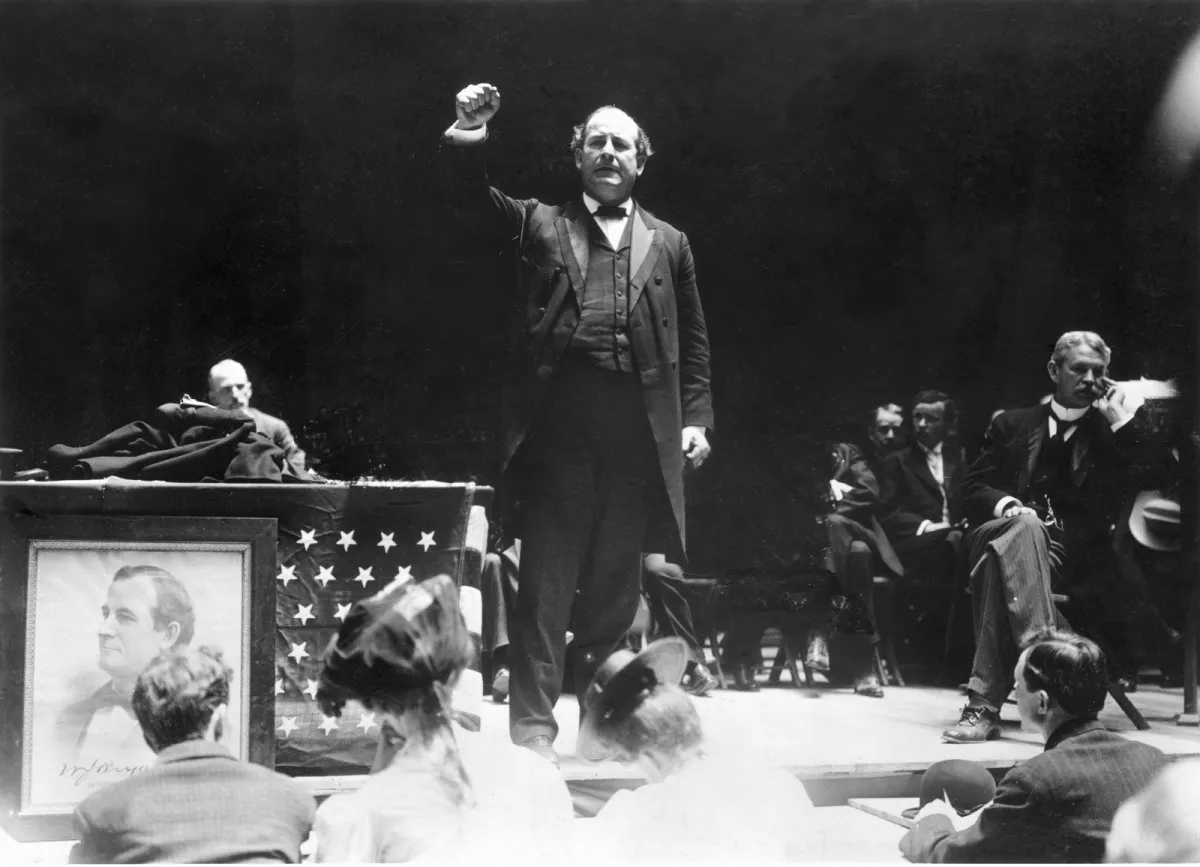 Photo: William Jennings Bryan, via cdn.britannica.com
He read the crowd of spectators and reporters, understanding that this trial was as much about public opinion as legal precedent. He baited Bryan into taking the witness stand as an expert on the Bible, then systematically destroyed his credibility using the same techniques he had once used to convince farmers to try their luck at ring toss.
Most brilliantly, he managed the entire courtroom like a carnival barker managing a crowd. He controlled the energy, directed attention where he wanted it, and made sure that by the time the trial was over, everyone was talking about what he wanted them to talk about — not whether Scopes had violated Tennessee law, but whether the law itself made any sense.
The Unlikely Foundation
By the time Darrow died in 1938, he was remembered as one of America's greatest lawyers, a champion of civil liberties and progressive causes. Legal scholars studied his closing arguments, and law schools taught courses on his courtroom techniques.
What they rarely mentioned was that his most effective strategies traced back to those teenage summers when he learned to separate marks from their money using nothing but psychology and showmanship. The same skills that made him successful at convincing farmers to throw rings at bottles made him unstoppable at convincing juries to see the world his way.
In the end, Clarence Darrow's greatest legal education didn't come from books or professors — it came from understanding that every human interaction is fundamentally about reading the other person's needs and desires, then giving them what they want to hear in a way that serves your purposes. He learned that lesson at a carnival game in small-town Ohio, and he never forgot it.