Imagine standing before a crowd of thousands, your voice the only weapon between democracy and tyranny, knowing that every word could determine your city's fate. Now imagine doing it with a severe stutter that once made children laugh at you in the streets.
This was the reality Demosthenes faced every time he rose to speak in ancient Athens. Yet this sickly, ridiculed young man would become the most influential orator in Western history—a transformation so complete that his name became synonymous with the power of persuasion itself.
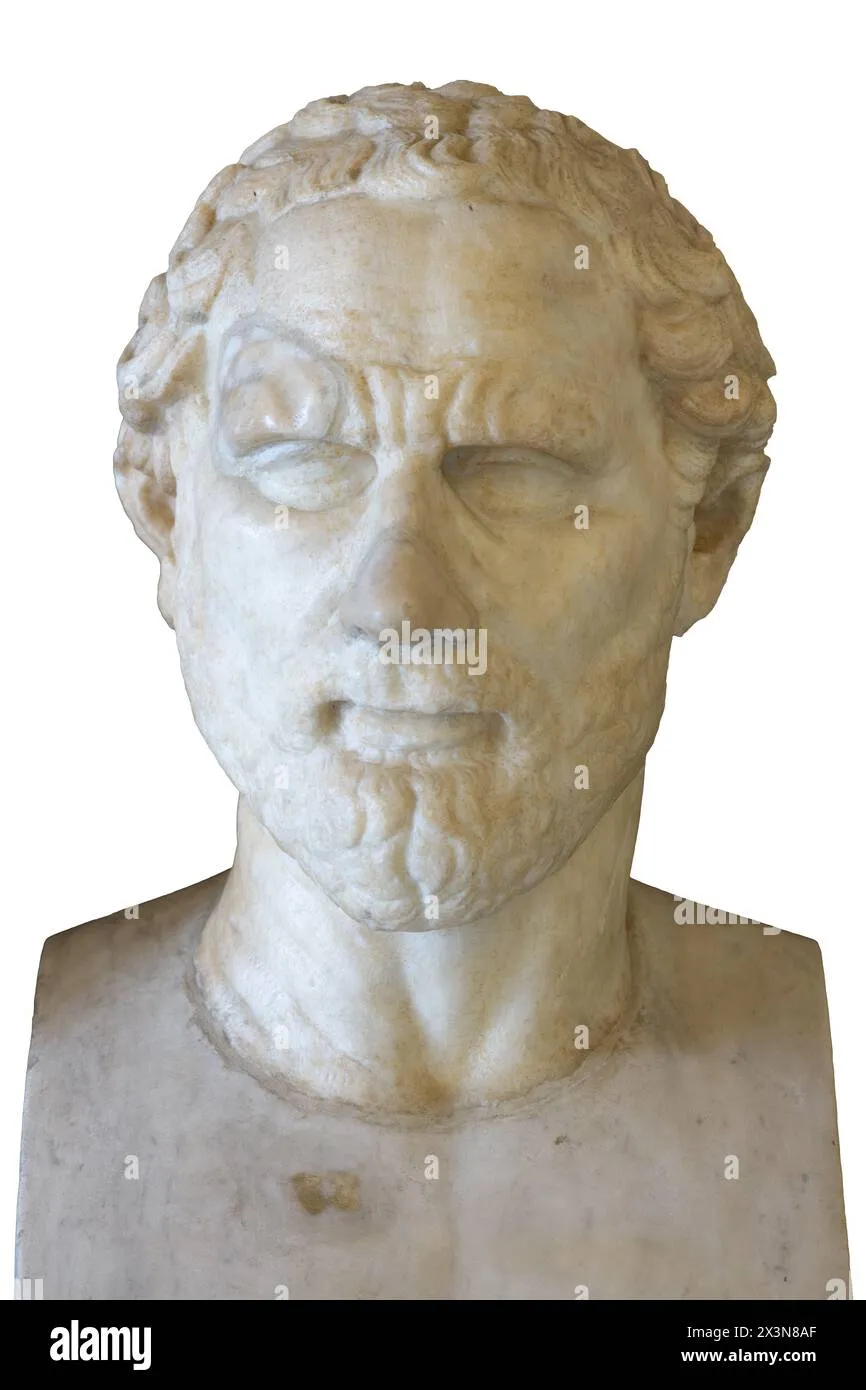 Photo: Demosthenes, via c8.alamy.com
The Inheritance That Never Came
Born into wealth around 384 BCE, Demosthenes seemed destined for comfort. His father owned a successful workshop making swords and furniture, leaving behind a substantial fortune when he died. But seven-year-old Demosthenes would never see a dime of it.
His guardians—trusted family friends—systematically looted his inheritance. By the time he came of age, the money was gone, the business destroyed, and young Demosthenes found himself not just poor, but physically weak and cursed with a speech impediment that made him the target of constant mockery.
In ancient Athens, where a man's ability to speak publicly determined his entire social standing, this was tantamount to a death sentence for any political ambitions. Citizens who couldn't articulate their thoughts clearly were effectively barred from participating in democracy.
But Demosthenes had something his tormentors didn't: an obsessive refusal to accept his circumstances.
The Method That Sounds Like Madness
What happened next has become the stuff of legend, though historians believe most of it actually occurred. Determined to overcome his speech problems, Demosthenes developed a training regimen that would make today's most dedicated athletes look casual.
He filled his mouth with pebbles and practiced speaking clearly despite the obstruction. He shaved half his head so he'd be too embarrassed to appear in public, forcing himself to stay home and practice. Most famously, he would trek to the seashore and deliver speeches while shouting over the crashing waves, training his voice to project over any distraction.
He built himself an underground study where he would practice for months at a time, emerging only when he'd mastered a new technique. He hung a sword from the ceiling above his shoulder—if he unconsciously raised it while speaking (a nervous habit), the blade would cut him, training him to control his body language through pain.
To modern ears, this sounds like the behavior of someone completely unhinged. But Demosthenes understood something profound: extraordinary circumstances require extraordinary measures.
The Courtroom Comeback
His first major test came when he sued his former guardians to recover his stolen inheritance. Standing before an Athenian jury, this young man who had once been unable to string together a coherent sentence delivered a speech so compelling, so precisely constructed, that he not only won his case but announced himself as a new force in Athenian society.
The victory was more than financial—it was proof that his grueling self-transformation had worked. Word spread quickly through Athens about the young orator who had seemingly appeared from nowhere.
But Demosthenes had bigger ambitions than courtroom victories. He wanted to save his city.
The Voice Against an Empire
Philip II of Macedon was systematically conquering Greek city-states, and most Athenians seemed content to ignore the growing threat. Demosthenes saw what others missed: Philip wasn't just another regional strongman, but an existential threat to Athenian democracy itself.
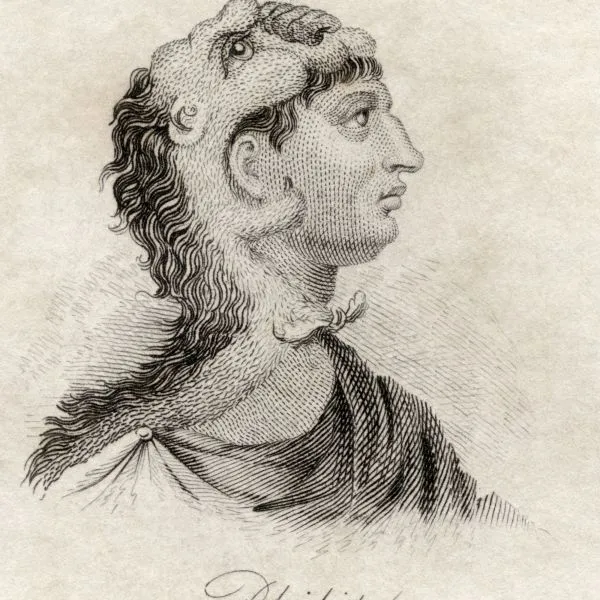 Photo: Philip II of Macedon, via images.nationalgeographic.org
For over a decade, Demosthenes delivered a series of speeches—known as the Philippics—that warned of Macedonian expansion and called for military action. These weren't just political addresses; they were masterpieces of persuasion that combined logical argument with emotional appeal in ways that speechwriters still study today.
His descriptions of Philip were so vivid and damning that the Macedonian king reportedly said he'd rather face an army than endure another of Demosthenes' verbal assaults.
The Legacy That Outlived an Empire
Demosthenes didn't ultimately save Athens from Macedonian conquest, but his influence extended far beyond his political victories and defeats. He essentially invented the template for Western oratory that we still use today.
Every courtroom closing argument, every political speech, every TED talk follows principles he established: the importance of emotional connection, the power of specific details, the rhythm of building to a climax. When Abraham Lincoln crafted the Gettysburg Address or when Martin Luther King Jr. delivered "I Have a Dream," they were using techniques Demosthenes perfected on the shores of ancient Greece.
More importantly, his story proved something that resonates just as powerfully today: the limitations others place on us don't have to define our possibilities. The boy who couldn't speak clearly became the man whose words echoed through centuries.
The Obsession That Changed Everything
In our age of quick fixes and life hacks, Demosthenes' story feels almost alien in its commitment to grinding, methodical improvement. He didn't overcome his stutter through positive thinking or natural talent—he outworked it, out-stubborned it, and ultimately transformed it into the very foundation of his strength.
He understood that the voice that had once betrayed him could become his greatest weapon, but only if he was willing to rebuild it completely from the ground up.
That willingness to start over, to embrace the uncomfortable work of fundamental change, turned a ridiculed boy into a man whose name became synonymous with the power of human speech itself. Not bad for someone who started out unable to say his own name clearly.