The Strongman's Unlikely Pivot
In 1815, Giovanni Belzoni was performing in London music halls, lifting eight men over his head while audiences gasped at his six-foot-seven frame. The former circus performer had no formal education, spoke broken English, and knew absolutely nothing about archaeology. Within five years, he would be credited with some of the most significant discoveries in Egyptian history—discoveries that would make him wealthy, famous, and forever change how the world understood ancient civilizations.
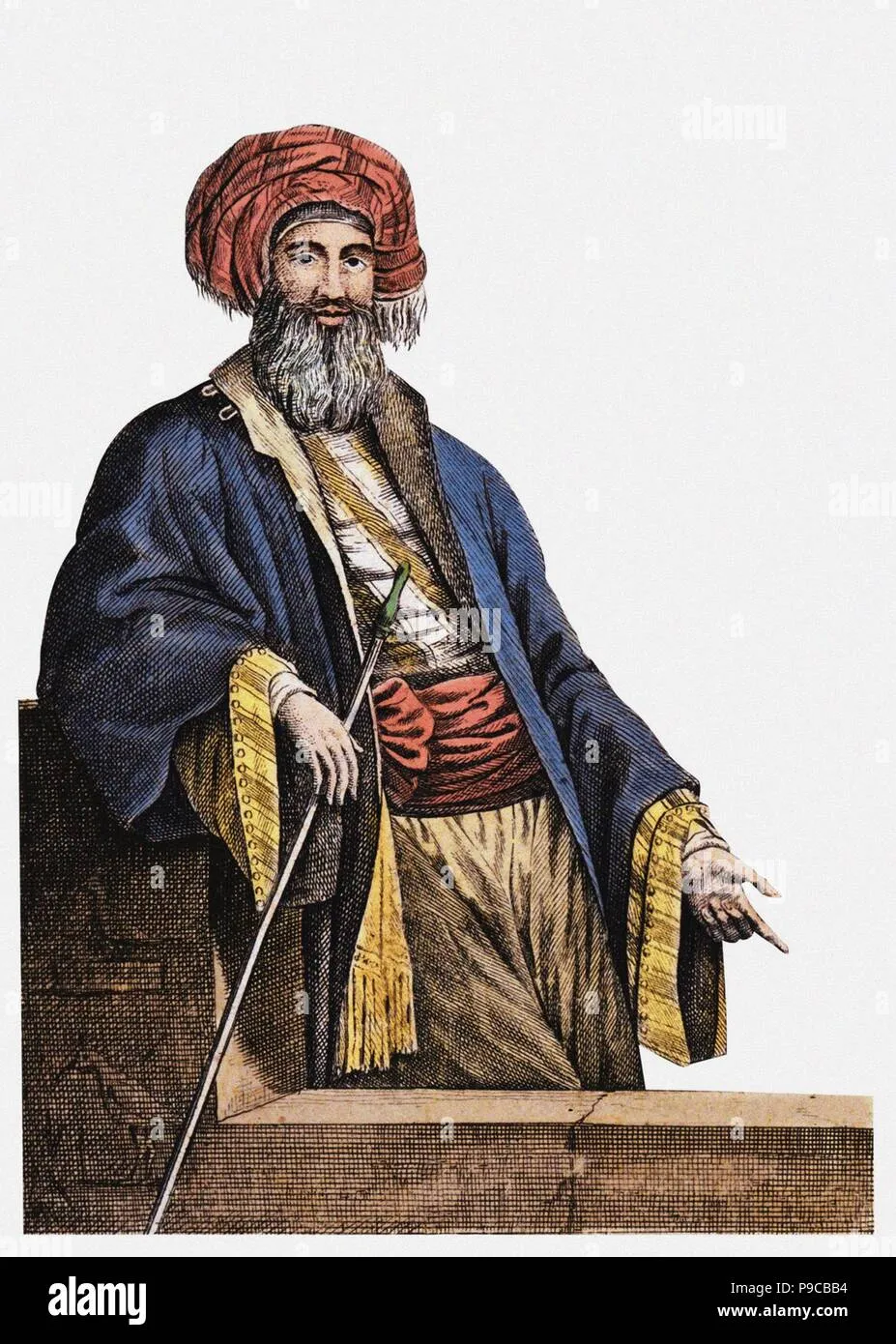 Photo: Giovanni Belzoni, via c8.alamy.com
Belzoni's transformation from entertainer to explorer began with a lie so audacious it bordered on performance art. When economic hardship forced him to abandon his circus career, he reinvented himself as a hydraulic engineer and convinced the Egyptian government that he could improve their irrigation systems. The fact that he had no engineering experience seemed irrelevant—his imposing presence and confident manner were credentials enough in an era when expertise was often measured by charisma rather than qualifications.
The irrigation project failed spectacularly, but by then Belzoni had discovered something far more valuable than water pumps: the lucrative world of Egyptian antiquities. European collectors were paying enormous sums for ancient artifacts, and the archaeological establishment was small enough that a convincing impostor could easily infiltrate its ranks.
The Art of Academic Deception
Belzoni's entry into archaeology required a masterclass in intellectual fraud. He studied museum catalogs, memorized the names of prominent scholars, and learned just enough ancient history to sound credible in casual conversation. When he met British Consul General Henry Salt in Cairo, Belzoni presented himself as an experienced archaeologist seeking patronage for excavations.
Salt, who desperately needed someone to compete with French archaeologists who were systematically looting Egyptian sites, didn't probe too deeply into Belzoni's credentials. The Italian's physical strength was obvious—he could move massive stone blocks that required teams of local workers—and his enthusiasm seemed genuine. In an era before academic verification, recommendation letters, or background checks, Belzoni's confidence was currency enough.
The deception deepened when Belzoni began corresponding with European museums and collectors. His letters, written in broken but earnest English, described his "years of experience" and "deep knowledge of Egyptian customs." He invented previous expeditions, fabricated scholarly connections, and created an entirely fictional resume that positioned him as one of Egypt's leading archaeological experts.
The Accidental Genius
Belzoni's first major "discovery" revealed both his ignorance and his instinctive brilliance. Tasked with removing a massive bust of Ramesses II from the temple at Thebes, he approached the problem not as an archaeologist concerned with preserving context, but as a former strongman focused on moving heavy objects efficiently.
While trained archaeologists might have spent months planning the careful documentation and removal of the seven-ton statue, Belzoni simply figured out how to get it onto a boat. His methods were crude but effective—he used palm tree trunks as rollers, organized teams of local workers, and treated the ancient sculpture like any other piece of cargo. The bust reached London safely, where it became one of the British Museum's most prized possessions.
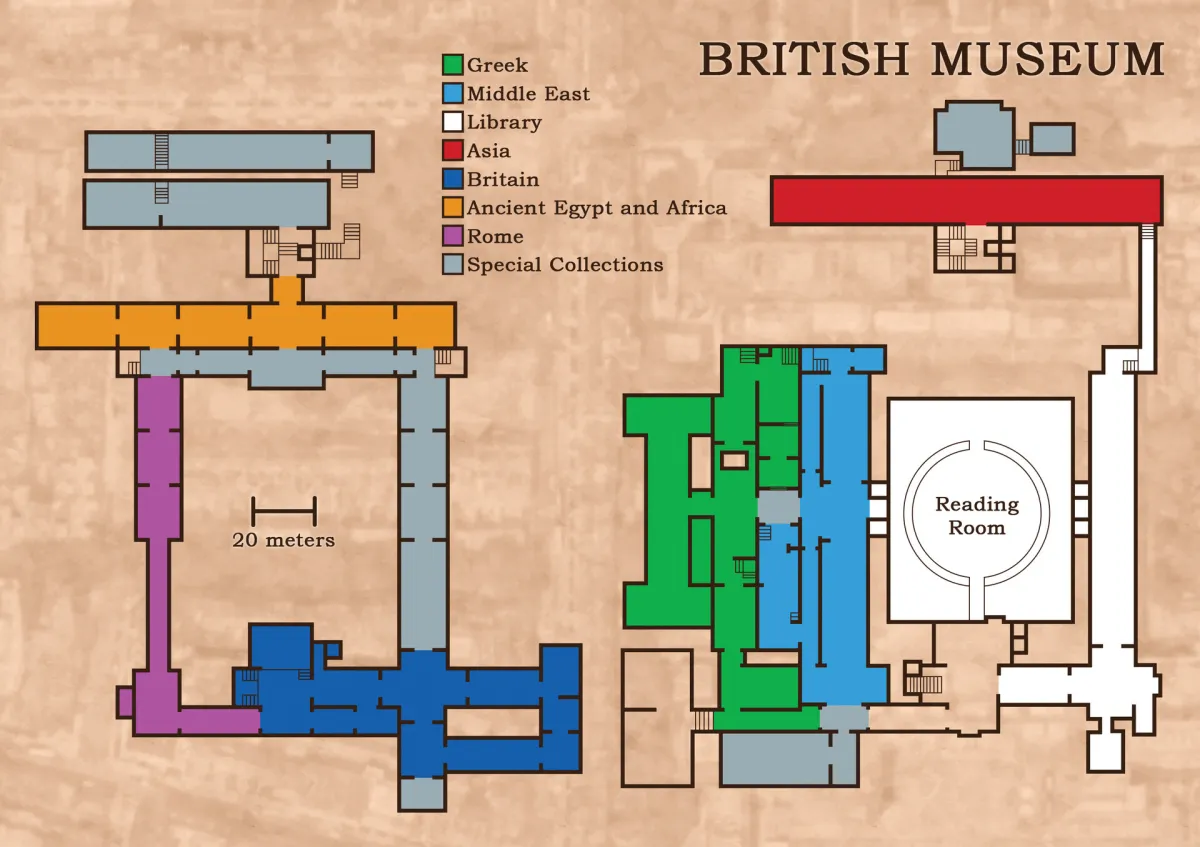 Photo: British Museum, via cdnb.artstation.com
The success emboldened Belzoni to attempt increasingly ambitious projects. His lack of formal training, rather than hindering him, actually proved advantageous. He wasn't constrained by academic theories about what was possible or proper. When other archaeologists said certain tombs couldn't be opened or specific sites couldn't be excavated, Belzoni simply ignored their objections and tried anyway.
The Valley of Kings Breakthrough
Belzoni's most significant discovery came in 1817, when he located the tomb of Seti I in the Valley of the Kings. The find was remarkable not just for its artistic treasures, but for its state of preservation—the tomb's paintings and hieroglyphics were virtually intact, offering scholars an unprecedented glimpse into ancient Egyptian burial practices.
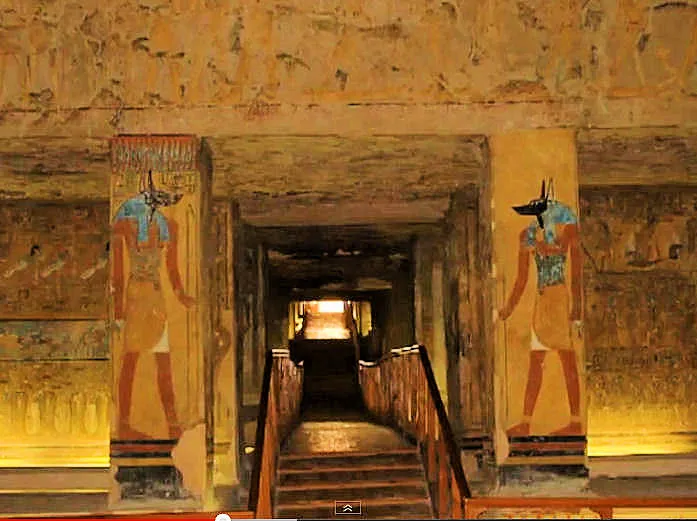 Photo: Valley of the Kings, via toursofegypt.com.au
The discovery process revealed Belzoni's unique approach to archaeology. While trained scholars spent time studying existing maps and consulting ancient texts, Belzoni simply walked around the valley looking for promising spots to dig. His method was part intuition, part physical investigation, and part pure luck. He noticed subtle depressions in the ground, changes in soil color, and other environmental clues that suggested human activity.
When he finally broke through into Seti I's burial chamber, Belzoni found himself in a completely preserved royal tomb filled with intricate paintings, carved sarcophagi, and hieroglyphic texts that would take scholars decades to fully translate. His detailed drawings and descriptions of the tomb's contents provided invaluable documentation, even though he had no formal training in archaeological recording methods.
The Ethical Minefield
Belzoni's success raised uncomfortable questions that continue to plague archaeology today. Was he a pioneering explorer who preserved ancient treasures for posterity, or was he simply a more effective grave robber who happened to work for European museums instead of private collectors?
His methods were undeniably destructive by modern standards. He often used gunpowder to blast through blocked passages, damaged artifacts during transport, and showed little concern for preserving the archaeological context of his finds. Yet his work also saved countless artifacts from local looters who were far less careful and had no interest in scholarly documentation.
The financial aspect of Belzoni's career was equally complex. He sold artifacts to European collectors for enormous sums, essentially profiting from Egypt's cultural heritage. But he also used those profits to fund further excavations, expanding knowledge of ancient Egyptian civilization in ways that purely academic expeditions couldn't afford.
The Impostor's Vindication
By 1820, Belzoni had become one of Europe's most celebrated archaeologists. His exhibitions in London drew enormous crowds eager to see authentic Egyptian artifacts and hear firsthand accounts of his discoveries. The former circus performer was now lecturing to scholarly societies, corresponding with museum directors, and planning expeditions to unexplored regions of Africa.
The transformation was complete, but it raised a troubling question: if someone with no training could make such significant archaeological discoveries, what did that say about the academic establishment that had initially excluded him? Belzoni's success suggested that formal education might be less important than curiosity, determination, and physical courage.
His critics—and there were many—argued that his lack of training led to irreparable damage to archaeological sites. They weren't wrong. Belzoni's methods destroyed valuable contextual information and damaged artifacts that more careful scholars might have preserved. But his defenders pointed out that without his intervention, many of these same artifacts would have been lost entirely to local looters or natural deterioration.
The Legacy of Legitimized Fraud
Belzoni died in 1823 while attempting to reach the source of the Niger River, still pursuing adventures that combined genuine exploration with shameless self-promotion. His archaeological career had lasted less than a decade, but it fundamentally changed how Europeans understood ancient Egypt and established precedents for future excavations.
The artifacts he recovered—including the Ramesses II bust, treasures from Seti I's tomb, and countless smaller pieces—remain in major museums worldwide. His detailed accounts of Egyptian sites provided valuable documentation for later scholars, even though his methods were often questionable.
Perhaps most significantly, Belzoni's story highlighted the arbitrary nature of expertise in emerging fields. His success demonstrated that institutional gatekeeping could exclude capable individuals while admitting incompetent ones, and that sometimes the most important discoveries come from those willing to ignore conventional wisdom.
Questions Without Easy Answers
Belzoni's legacy forces us to grapple with uncomfortable questions about knowledge, authority, and cultural ownership. Should we celebrate his discoveries while condemning his methods? Can we separate the value of his contributions from the deception that made them possible?
Modern archaeology has developed rigorous standards for training, documentation, and cultural sensitivity that would have prevented someone like Belzoni from entering the field. These standards protect archaeological sites and ensure that discoveries contribute to scholarly knowledge rather than private profit. But they also create barriers that might exclude unconventional thinkers who could make genuine contributions.
The strongman who became an archaeologist through sheer audacity reminds us that expertise is often more fluid than institutions would like to admit. Sometimes the most important discoveries come not from those who follow established rules, but from those brave—or foolish—enough to ignore them entirely. Whether that's something to celebrate or something to guard against depends on your perspective on who should control our understanding of the past.