From the Streets of Storyville to the World's Greatest Stages: The Unlikely Education of Louis Armstrong
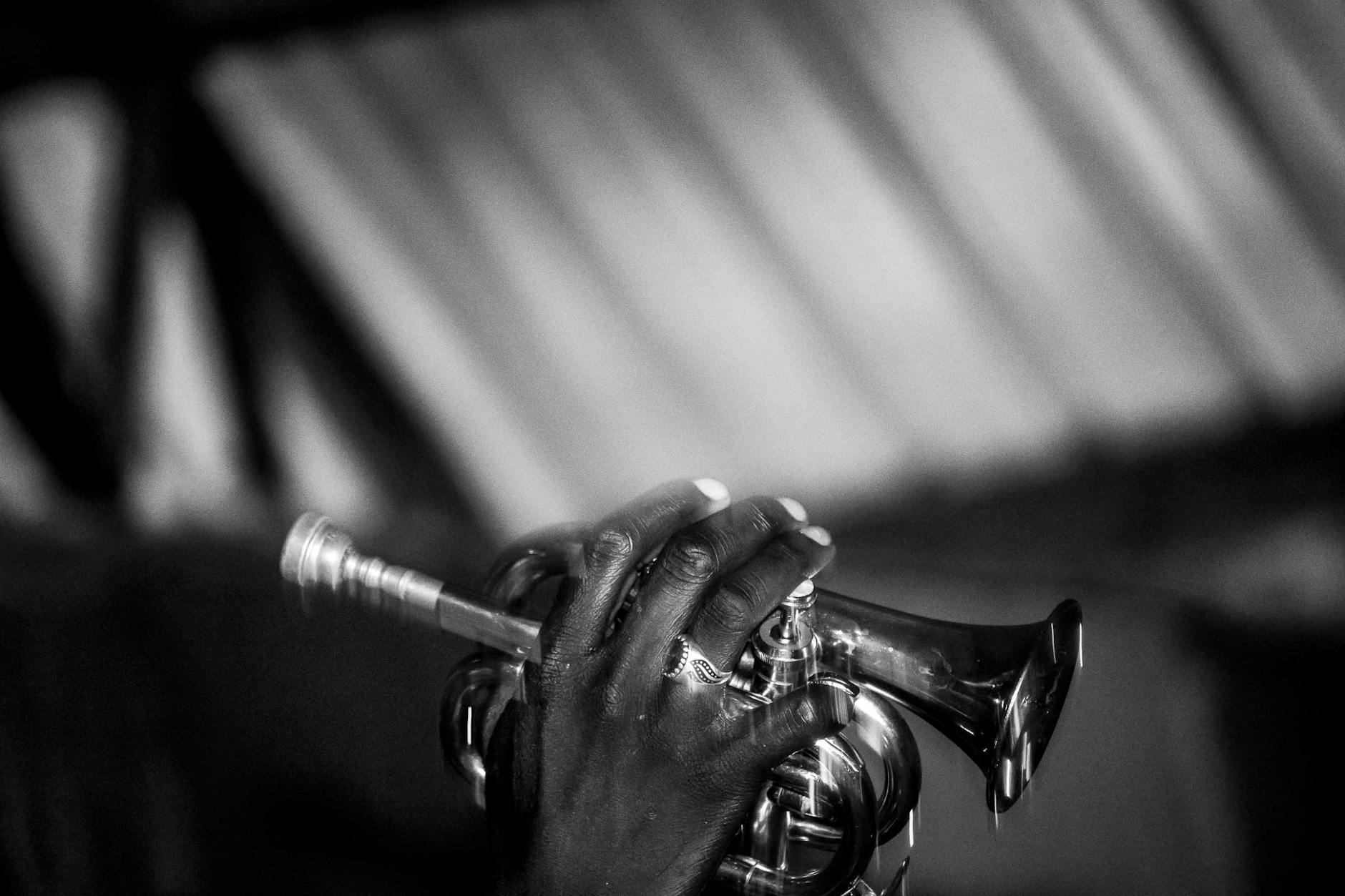
From the Streets of Storyville to the World's Greatest Stages: The Unlikely Education of Louis Armstrong
There's a version of Louis Armstrong's story that gets told at jazz festivals and in music textbooks — the one where a poor kid from New Orleans picked up a trumpet and became the most influential musician of the twentieth century. It's a good story. But the real one is stranger, harder, and far more interesting.
Because Louis Armstrong didn't just overcome his circumstances. He was made by them.
Born Into the Deep End
Armstrong came into the world on August 4, 1901, in a neighborhood so rough that locals called it "the Battlefield." Storyville — New Orleans' notorious red-light district — was practically his backyard. His father abandoned the family almost immediately. His mother, Mary Ann, was barely keeping her head above water, cycling between domestic work and a life that her son would later describe only in careful, protective terms.
Louis and his younger sister were largely raised by their grandmother. He sold newspapers, hauled coal, and did whatever odd jobs a child could find in a city that wasn't exactly looking out for him. Formal education was sporadic at best.
But Storyville was alive with music. Brass bands rolled through the streets. Honky-tonk piano spilled out of saloon doors. Funeral processions moved through the neighborhood with that particular New Orleans alchemy — grief and joy folded into each other, carried on the back of a cornet. Armstrong absorbed all of it, the way kids absorb everything when nobody's telling them what to pay attention to.
The Night That Changed Everything
On New Year's Eve, 1912, a eleven-year-old Armstrong fired a pistol into the air — a borrowed .38, loaded with blanks — to celebrate the new year. It was the kind of impulsive, joyful, completely reckless thing that children do when they've grown up without guardrails.
The police didn't see it that way. He was arrested and sent to the Colored Waif's Home for Boys.
For most kids in that situation, that's where the story ends — or at least where it takes a long, grinding detour. But the Waif's Home had something Armstrong had never had consistent access to before: a music instructor named Peter Davis, and a brass band.
Davis didn't warm to Armstrong immediately. By some accounts, he found the boy difficult, too street-hardened to trust. But Armstrong was persistent in the way that only hungry kids can be, and eventually Davis handed him a bugle. Then a cornet. Then something clicked.
Learning to Speak a New Language
What Armstrong developed in those months at the Waif's Home wasn't just technical ability — it was the beginning of a musical voice that would eventually rewrite the rules of American music. He had no formal theory training, no classical foundation to constrain him. He had ears sharpened by years of listening to Storyville's chaotic, joyful noise, and a natural physical gift that bordered on the supernatural.
When he was released and returned to the streets, he was different. He started sitting in with local bands, absorbing everything from the musicians around him. He caught the attention of Joe "King" Oliver, the reigning cornet king of New Orleans, who took the teenager under his wing in what became one of the most consequential mentorships in American cultural history.
Oliver taught Armstrong discipline and structure. But Armstrong brought something Oliver couldn't teach — an improvisational instinct so fluid and inventive that it seemed to come from somewhere beyond technique. His phrasing was rhythmically daring in ways that broke from the rigid patterns of earlier jazz. He could bend a note, stretch time, make a trumpet sound like it was laughing or weeping, sometimes simultaneously.
The Sound of a Whole New World
By the time Armstrong arrived in Chicago in 1922, summoned north by Oliver, he was already something special. By the time he recorded his "Hot Five" and "Hot Seven" sessions in the mid-1920s, he was redefining what music could do.
Those recordings — made between 1925 and 1928 — are still studied in conservatories today. They introduced the concept of the jazz soloist as a storyteller, the idea that a single improvised line could carry as much emotional weight as an entire orchestral arrangement. Armstrong didn't just play within the music. He led it somewhere new every time.
He went on to become a global ambassador for American music, performing for heads of state, recording hundreds of albums, appearing in films, and earning a nickname — Satchmo — that became synonymous with joy itself. His 1964 recording of "Hello, Dolly!" knocked the Beatles off the top of the Billboard charts. He was sixty-two years old.
What Storyville Actually Gave Him
It would be easy — and wrong — to romanticize Armstrong's poverty. Hardship isn't a gift. The Battlefield chewed up most of the people who grew up there, and no amount of retrospective inspiration-mining changes that.
But there's something worth sitting with in Armstrong's story. The absence of formal instruction meant he developed a sound that belonged entirely to him. The chaos of Storyville gave him a musical education that no conservatory could have replicated. And the reform school that was supposed to be a punishment handed him, almost accidentally, the instrument that would define his life.
He once said: "My whole life has been happiness. Through all the misfortune, I don't think I've spent one unhappy day."
That's not naivety. That's alchemy — the rare human ability to take the rawest, hardest material life provides and turn it into something that outlasts everything else.
Louis Armstrong didn't succeed despite where he came from. He succeeded because he came from somewhere that demanded he find his own way through. And the path he found changed the sound of the world.