The Girl Who Played by Feel
In a cramped Pittsburgh apartment in 1915, six-year-old Mary Lou Williams sat at a broken-down piano that hadn't been tuned in years. She couldn't read a single note on a page, but when she placed her fingers on those yellowed keys, something magical happened. Melodies poured out of her like water from a spring—complex, sophisticated arrangements that shouldn't have been possible from someone who had never seen sheet music.
Her stepfather thought it was a parlor trick. Her mother worried it was some kind of supernatural gift. But Mary Lou knew it was simpler than that: she could hear music the way other people heard conversations. Every song had a story, every chord progression had a personality, and every rhythm had a heartbeat she could follow without ever needing to see it written down.
While other children her age were learning to read "Mary Had a Little Lamb" from beginner piano books, Williams was already improvising complex jazz arrangements by ear. She'd listen to records once and then play them back perfectly, often adding her own embellishments that improved on the original. By age twelve, she was earning money playing at local parties, developing a reputation as the girl who could play anything—except what was written on the page.
The Kansas City Revolution
When Williams moved to Kansas City in the 1920s, she entered a musical ecosystem unlike anywhere else in America. This was the era of jam sessions that lasted until sunrise, of musicians pushing each other to explore uncharted territories of sound. But even in this environment of musical innovation, Williams stood out for her complete rejection of traditional musical education.
While conservatory-trained musicians struggled to adapt their formal knowledge to the loose, improvisational demands of Kansas City jazz, Williams thrived. She didn't have to unlearn academic rules because she had never learned them in the first place. Her arrangements for Andy Kirk's "Twelve Clouds of Joy" became legendary not because they followed established patterns, but because they created entirely new ones.
Established musicians would watch her work with a mixture of admiration and bewilderment. She'd sit at the piano during rehearsals, listen to the band play through a song once, then immediately begin crafting arrangements that transformed simple melodies into complex, layered compositions. "She hears things the rest of us miss," said one Kansas City veteran. "It's like she's got a direct line to where the music wants to go."
The Conservatory's Worst Nightmare
As Williams' reputation grew, formally trained musicians began seeking her out—not to teach her, but to learn from her. Conservatory graduates who had spent years studying harmony and composition would sit in her living room, frantically scribbling down the chord progressions she played effortlessly by ear.
The irony wasn't lost on Williams. "They want to learn how to do what I do naturally," she once observed, "but they're trying to turn it back into the rules I never learned in the first place." Her inability to read music had become her greatest asset, allowing her to approach each song as a fresh conversation rather than a predetermined script.
When Benny Goodman commissioned her to write arrangements for his orchestra, Williams faced a unique challenge. She could create the music, but she couldn't write it down. The solution was typically unconventional: she would play her arrangements on piano while a trained arranger transcribed them. The resulting compositions were so innovative that other arrangers began studying them, trying to reverse-engineer the musical logic that Williams had developed through pure intuition.
Breaking Down Barriers by Ignoring Them
In the 1940s, as bebop revolutionized jazz, Williams found herself at the center of yet another musical transformation. While other musicians struggled to adapt to the new style's complex harmonies and rapid-fire improvisation, Williams embraced it immediately. She could hear the connections between bebop and the Kansas City swing she had helped create, understanding intuitively how one style evolved from another.
Her apartment in Harlem became an unofficial conservatory for the bebop generation. Thelonious Monk, Dizzy Gillespie, and Charlie Parker would gather around her piano, testing out new ideas and getting her immediate, uncensored feedback. "Mary Lou doesn't think about music," Monk once said. "She just is music."
The fact that she couldn't read sheet music actually enhanced her role as a mentor. When young musicians brought her their compositions, she would listen rather than look, focusing entirely on how the music felt rather than how it appeared on paper. Her feedback was always about the emotional truth of the music, not its technical correctness.
The Sacred and the Swing
In the 1950s, Williams shocked the jazz world by temporarily retiring from performing to focus on religious music. But even this spiritual turn reflected her unique relationship with musical literacy. She began composing masses and hymns, but still couldn't write them down. Instead, she would play them for priests and church musicians, who would transcribe her sacred compositions.
Her "Mary Lou's Mass" became one of the first jazz masses ever performed in a Catholic church, but its creation followed the same intuitive process she had always used. She would sit at the piano and let the music emerge organically, trusting her ear to guide her toward melodies that served both spiritual and artistic purposes.
The Teacher Who Couldn't Read the Lesson Plan
When Williams finally began teaching formally at Duke University in the 1970s, she faced the ultimate challenge: how do you teach music theory when you've never learned it yourself? Her solution was revolutionary. Instead of starting with scales and chord progressions, she began with listening.
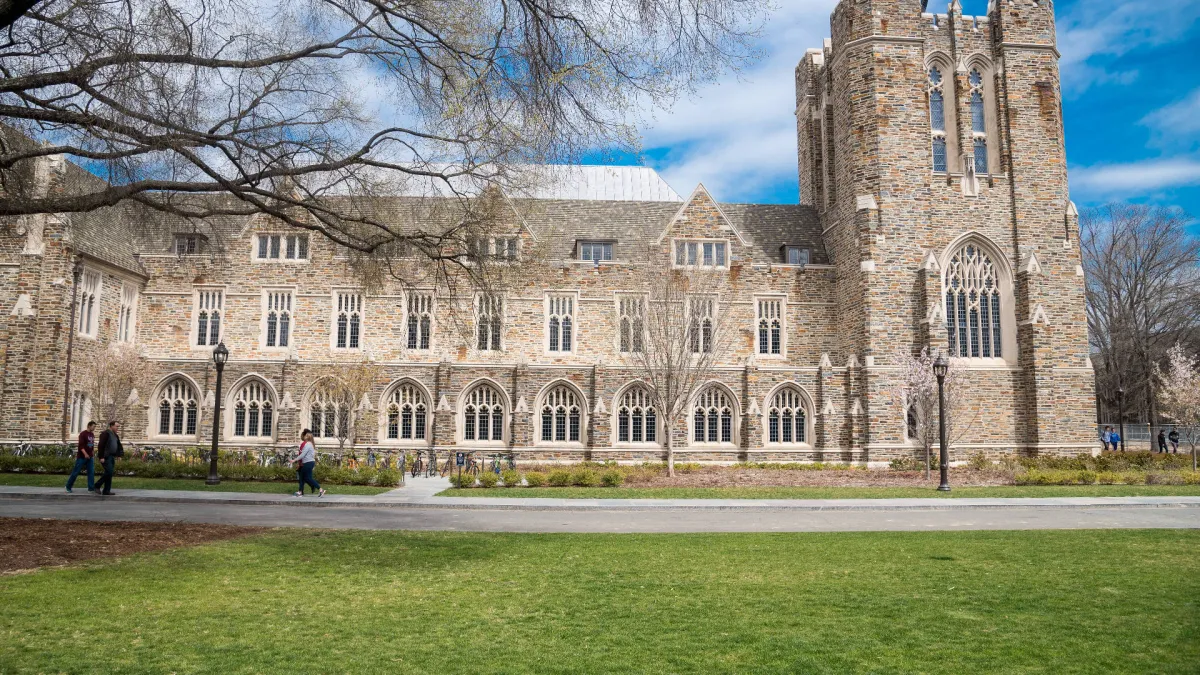 Photo: Duke University, via wallpapers.com
Students would sit around her piano while she played, learning to hear the relationships between notes before they ever saw them written down. "Feel it first," she would tell them. "Understand it second. Write it down last—if you have to write it down at all."
Her teaching method produced musicians who could improvise with unusual freedom and creativity. They had learned to trust their ears the way Williams had always trusted hers, developing musical intuition alongside technical skill. Many of her students later credited her with teaching them to hear music as a living language rather than a set of written rules.
The Legacy of Musical Illiteracy
Mary Lou Williams died in 1981, having spent more than six decades proving that musical education and musical genius don't always go hand in hand. She had arranged for some of the biggest names in jazz, composed sacred music that bridged worlds, and mentored generations of musicians—all without ever learning to read the very notation system that most people consider essential to serious musicianship.
Her story challenges our assumptions about expertise and education. In a world that often equates credentials with capability, Williams demonstrated that sometimes the most innovative thinking comes from those who approach problems without preconceived notions about how they should be solved.
Today, when young musicians discover Williams' recordings, they're often amazed to learn that the complex, sophisticated arrangements they're hearing came from someone who was, by traditional standards, musically illiterate. Her legacy suggests that perhaps the most important musical literacy isn't the ability to read notes on a page, but the ability to read the deeper language of human emotion and expression—a language that, once mastered, makes all other musical education seem like a helpful but ultimately optional translation.