The Street Hustler Who Taught America's Finest How to Catch Thieves

When the Teacher Was the Thief
In the marble halls of the FBI Academy in Quantico, Virginia, federal agents learned to spot deception, analyze crime patterns, and understand criminal psychology. But there was one instructor whose credentials didn't come from law school or police academies. Bob Arno's education happened in the crowded markets of European cities, where nimble fingers and quick eyes meant the difference between eating and going hungry.
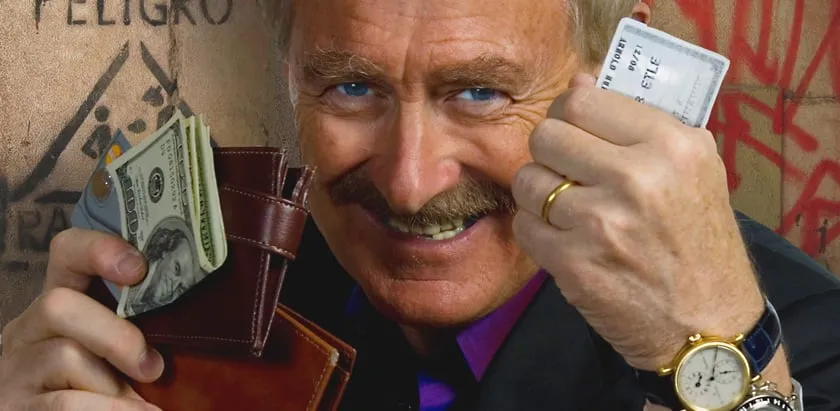 Photo: Bob Arno, via funny-business.com
 Photo: Quantico, Virginia, via assets.simpleviewinc.com
For decades, Arno was the man federal agencies called when they needed to understand how pickpockets really worked. Not the textbook version—the real thing. Because before you can catch a thief, you have to think like one. And nobody understood criminal hands quite like someone who'd spent years perfecting the craft himself.
The Making of a Master
Arno's story began in the bustling street markets of Europe, where survival meant staying one step ahead of both marks and authorities. As a young man navigating the gray economy of post-war Europe, he developed what would later become his signature skill: the ability to read human behavior in microseconds.
Every successful pickpocket learns to identify the perfect moment—when a person's attention drifts, when their guard drops, when their body language signals distraction. Arno became a master of these moments, developing an almost supernatural ability to predict human movement and exploit the tiny windows of vulnerability that everyone unconsciously creates.
But unlike many career criminals, Arno possessed something rare: analytical intelligence. He didn't just steal—he studied the mechanics of theft. He understood why certain techniques worked, how environmental factors affected success rates, and what psychological triggers made people vulnerable. Without realizing it, he was conducting the most comprehensive field research on pickpocketing that had ever been done.
The Unlikely Transition
The transformation from criminal to consultant didn't happen overnight. As Arno aged out of active street work, he began to see an opportunity that no one else had recognized. Law enforcement agencies were trying to combat pickpocketing and theft with theoretical knowledge and outdated assumptions. They were fighting shadows while the real experts—the criminals themselves—remained untapped resources.
Arno's first break came when a security consultant, frustrated by the ineffectiveness of traditional anti-theft training, took a chance on the reformed pickpocket. The results were immediate and dramatic. Where academic experts offered theories, Arno provided demonstrations. He could show, in real time, exactly how thieves operated and what security personnel should actually be looking for.
Teaching the Untouchables
What made Arno's instruction revolutionary wasn't just his criminal background—it was his ability to translate street-level expertise into actionable intelligence for professionals. When he worked with FBI agents, he didn't just explain pickpocketing techniques; he demonstrated how the same psychological principles applied to other forms of deception and fraud.
Casino security teams learned to spot the subtle body language that preceded card manipulation. Airline personnel discovered the behavioral patterns that distinguished nervous travelers from potential threats. Federal agents gained insights into criminal thinking that no amount of classroom training could provide.
Arno's teaching method was simple but effective: he would perform the crimes in controlled environments, then break down every element of the process. Students learned to recognize the misdirection techniques, the positioning strategies, and the psychological manipulation that made theft possible. More importantly, they learned to think defensively—to anticipate criminal behavior rather than simply react to it.
The Paradox of Expertise
What's remarkable about Arno's story isn't just that a criminal became a teacher—it's that his criminal expertise made him a better teacher than any traditional instructor could have been. His deep understanding of human psychology, honed through years of reading and manipulating strangers, gave him insights that academic criminologists could only theorize about.
This created an unusual dynamic in law enforcement training. Agencies that prided themselves on following proper procedures and maintaining ethical standards were learning from someone whose expertise came from breaking the law. But the results spoke for themselves: theft prevention improved dramatically wherever Arno's methods were implemented.
Legacy of an Unlikely Educator
By the time Arno stepped back from active consulting, he had trained thousands of law enforcement personnel across multiple agencies. His techniques became standard practice in many security protocols, and his insights influenced how agencies approached criminal psychology training.
The man who once made his living by exploiting human vulnerability had spent his later career teaching others how to protect against that same exploitation. It was a complete reversal that few people ever manage—and one that probably saved more money and prevented more crimes than his earlier career ever cost.
The Deeper Lesson
Bob Arno's transformation reveals something profound about expertise and redemption. Sometimes the people who understand a problem best are those who've been part of it. His story suggests that knowledge gained through experience—even questionable experience—can become a force for positive change when channeled in the right direction.
In a world that often writes off people based on their past mistakes, Arno proved that the most valuable teachers sometimes come from the most unexpected places. His greatest theft might have been stealing the assumption that criminals can't become forces for justice.