Cut, Benched, and Written Off: Five Future Legends Who Made Rejection Look Like Strategy
The Cut That Created a Legend
Michael Jordan walked into Emsley Laney High School's gym in Wilmington, North Carolina, expecting to see his name on the varsity basketball roster. Instead, he found a lesson in humiliation that would fuel one of the greatest careers in sports history.
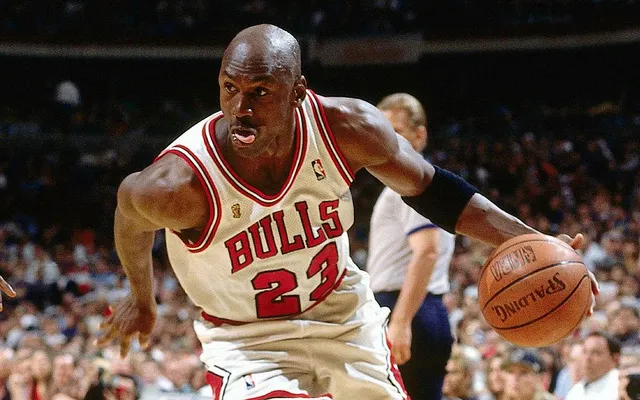 Photo: Michael Jordan, via live.staticflickr.com
Coach Clifton "Pop" Herring had made his decision: the 5'10" sophomore wasn't ready for varsity. Jordan's name appeared on the junior varsity list instead, a public declaration that he wasn't among the school's fifteen best players.
The next day, Jordan showed up to JV practice with something new—a fury that his teammates had never seen before. He practiced like his life depended on it, stayed after everyone else went home, and made sure that every coach in the building could hear him working when they walked past the gym.
"Whenever I was working out and got tired and figured I ought to stop, I'd close my eyes and see that list in the locker room without my name on it," Jordan later said. "That usually got me going again."
By his senior year, Jordan had grown to 6'3" and earned a scholarship to North Carolina. The rest became basketball mythology.
The Minor Leaguer Who Rewrote Baseball
Hank Aaron spent his first professional season in 1952 playing for the Indianapolis Clowns of the Negro Leagues, earning $200 a month and sleeping in bus station waiting rooms. When the Boston Braves scouts finally noticed him, their report was less than enthusiastic: "Good field, good arm, but can't hit a curveball."
 Photo: Hank Aaron, via www.bagira.bg
The Braves signed him anyway—barely. Aaron was their third choice for a $10,000 bonus, picked only after two other prospects turned them down.
His first spring training was a disaster. Veteran players openly mocked his cross-handed batting grip. Coaches suggested he might want to consider a different career. The local newspaper referred to him as "just another Negro League player trying to make it in the big leagues."
Aaron's response was methodical and devastating. He studied every pitcher he faced, memorizing their tendencies like he was preparing for a final exam. He worked with hitting coaches to fix his grip while keeping the natural power that made scouts notice him in the first place.
Twenty-one years later, Aaron broke Babe Ruth's home run record while receiving death threats from fans who couldn't accept that a Black man was rewriting baseball's most sacred record. The player they said couldn't hit a curveball finished with 755 home runs and a place in history that no one could question.
The Quarterback They Couldn't See
Drew Brees finished his high school career as one of the most accomplished quarterbacks in Texas history, but college scouts saw a fatal flaw: at 6'0", he was too short to succeed at the highest level.
Major programs passed. Texas offered him a chance to walk on—as a safety. Most Division I schools didn't bother recruiting him at all.
Purdue took a chance, and Brees made them look brilliant. He set school records, won Big Ten titles, and proved that accuracy could overcome height disadvantages. But even after a stellar college career, NFL scouts remained skeptical.
The San Diego Chargers drafted him in the second round—respectable, but not exactly a vote of confidence. When he struggled early in his career, critics pointed to his height as proof they had been right all along.
Then came the shoulder injury that nearly ended his career. The Chargers let him walk, convinced he was finished. The New Orleans Saints took a risk on a damaged quarterback that most teams wouldn't touch.
Brees responded by leading the Saints to their first Super Bowl victory and setting passing records that seemed impossible for someone "too short" to play the position. He retired as one of the most accurate passers in NFL history, proving that vision matters more than height.
The Runner They Laughed Off the Track
Wilma Rudolph was told she would never walk normally, let alone run competitively. Born prematurely and weighing just 4.5 pounds, she survived polio, scarlet fever, and pneumonia before her fifth birthday. The disease left her left leg twisted and weak, requiring a metal brace that she wore until age nine.
Doctors told her family she might never walk without assistance. Physical therapists suggested she set realistic expectations for her mobility.
Rudolph had different plans. She taught herself to walk without the brace by age twelve, started playing basketball in high school, and discovered she could run faster than anyone expected—including herself.
College track coaches noticed her speed, but remained skeptical about her potential at the highest level. Her form was unrefined, they said. Her training was inconsistent. She was too raw for international competition.
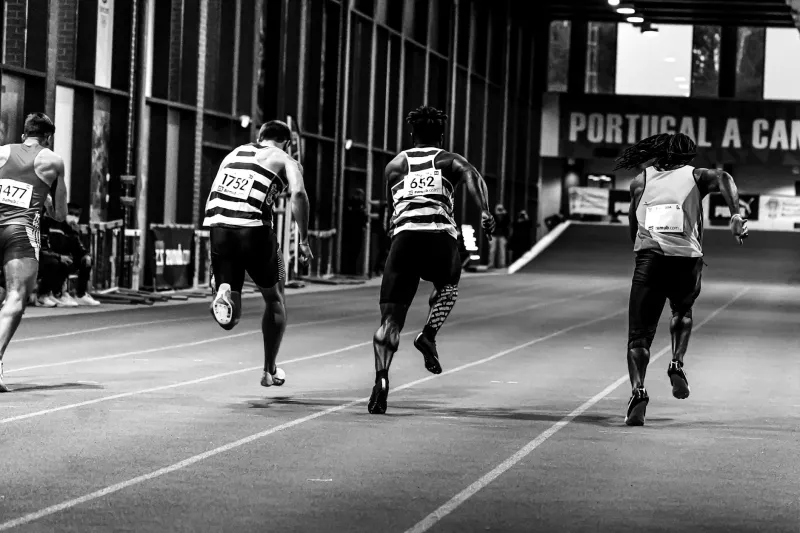
At the 1960 Rome Olympics, Rudolph became the first American woman to win three gold medals in a single Olympics, setting world records in the process. The girl who wasn't supposed to walk became the fastest woman in the world.
 Photo: 1960 Rome Olympics, via mait.de
The Fighter Who Couldn't Get a Fight
Rocky Marciano was twenty-five years old and working construction when he decided to try professional boxing. Trainers took one look at his 5'10" frame and crude technique and suggested he stick to his day job.
His first manager dropped him after six months, convinced he would never develop the skills necessary for serious competition. Local promoters refused to put him on their cards, saying he was too sloppy to draw crowds.
Marciano kept training anyway. He developed a work ethic that bordered on obsessive, throwing thousands of punches at a heavy bag until his hands bled. He studied film of great fighters, trying to understand what he was missing.
What he lacked in natural ability, he made up for with conditioning and determination. Opponents who were more skilled found themselves worn down by his relentless pressure. Fighters who were faster discovered that Marciano's power could end a fight with a single punch.
He retired as the only heavyweight champion in boxing history to finish his career undefeated, with forty-nine wins and no losses. The fighter who couldn't get a professional bout became the only heavyweight who never lost one.
The Common Thread
These five athletes shared something more valuable than natural talent: they understood that rejection is just information, not a verdict. Each of them used their dismissal as fuel rather than defeat, transforming the sting of being overlooked into the motivation that carried them to greatness.
In a culture obsessed with identifying talent early, their stories serve as reminders that potential isn't always visible to scouts and coaches. Sometimes the most dangerous competitors are the ones nobody saw coming—because they're the ones with the most to prove.