No Degree, No Problem: The Self-Made Historian Who Rescued a Town's Memory Before It Disappeared
The Man With the Tape Recorder
If you drove through Mound Bayou, Mississippi in the 1960s and stopped to ask directions, there was a reasonable chance you'd end up talking to Earnest Tibbs. Not because he was the most prominent person in town — he wasn't. He drove a delivery truck for a lumber yard, lived in a modest house on the east side, and by most conventional measures had a quiet, unremarkable life.
But if you mentioned anything about the town's history — who built what, who came from where, which families had been there since Reconstruction — the conversation would change. Tibbs would get a particular look on his face. He'd ask if you had a few minutes. And then he'd take you somewhere.
Sometimes it was a church basement. Sometimes it was someone's living room. Once, memorably, it was a field at the edge of a soybean farm where, Tibbs explained, there had been a school before the flood of 1927 washed it away. He knew because Ida Mae Patterson had told him so, and Ida Mae was ninety-three years old and the last living person who'd attended it.
He had recorded the conversation. He always recorded the conversations.
Why He Started
Mound Bayou was founded in 1887 by formerly enslaved people — one of the few all-Black towns in the South established during Reconstruction, and one of the few that survived into the twentieth century with any kind of continuity. It had its own banks, its own newspaper, its own civic infrastructure built entirely by people who had, a generation earlier, been legally defined as property.
Tibbs grew up knowing this in the way you know things that are told to you in fragments — a mention here, a photograph there, a story from a grandparent that trails off before it reaches its conclusion. What he didn't know was why so little of it was written down. Why the library had almost nothing. Why the school curriculum barely touched it. Why, when he went looking for documentation, he found mostly absence.
"History," he said in a 1989 interview with a regional newspaper, "doesn't go away. It just gets quiet. And if you're not paying attention, you mistake quiet for gone."
He started paying attention in 1961. He was twenty-seven years old, recently married, and working the same lumber yard job he'd hold for the next three decades. He bought a tape recorder with money he'd saved from overtime shifts, and he started knocking on doors.
The Methodology of Stubbornness
Tibbs had no training in oral history methodology. He hadn't read the academic literature on archival practice or community documentation. What he had was a genuine conviction that the people around him were carrying irreplaceable knowledge and that time was running out.
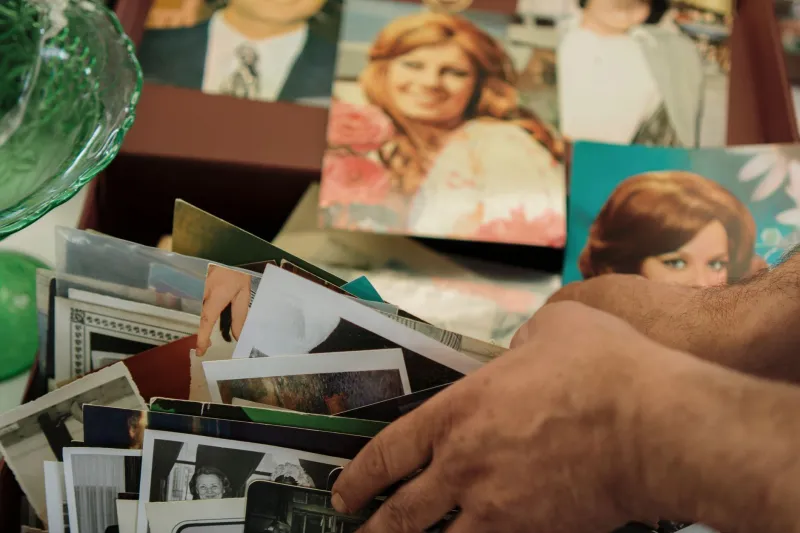
He interviewed more than four hundred people over the course of forty years. He recorded weddings and funerals and church services and the informal conversations that happen on porches on summer evenings. He photographed buildings before they were torn down and tracked down photographs from family albums, making copies and carefully labeling each one in his precise, unhurried handwriting.
He organized everything in a system that made perfect sense to him and baffled everyone else — shoeboxes arranged by decade, then by family name, then by a third category he called "things that don't fit anywhere but matter." Historians who eventually came to work with the collection described it as simultaneously the most chaotic and the most complete local archive they'd ever encountered.
The chaos was real. So was the completeness.
When the Academics Arrived
In the late 1980s, a graduate student from the University of Mississippi named Patricia Sterns drove to Mound Bayou to research her dissertation on post-Reconstruction Black towns in the Mississippi Delta. She had expected to find very little. The published record was thin. The state archives had almost nothing. She was prepared for a short trip.
She stayed for three months.
Everything she needed — everything she'd assumed was lost — was in Tibbs's house. Recorded voices. Photographs. Land records he'd obtained through sheer persistence from county offices that hadn't known they had them. Letters he'd tracked down from descendants who'd moved to Chicago and Detroit and Memphis decades earlier. A handwritten map of the town as it had existed in 1910, reconstructed from interviews with six different elderly residents and cross-referenced against a single surviving photograph.
"He'd done the work," Sterns said later. "All of it. And nobody knew."
Her dissertation, and the book that followed, credited Tibbs extensively. It was the first time his name appeared in any academic publication. He was sixty-two years old.
The Question of Authority
What Tibbs's story raises — and what makes it genuinely uncomfortable for institutions to reckon with — is the question of who gets to be a keeper of history.
The formal answer has always been: people with credentials. Trained archivists. Credentialed historians. People who work within institutions that provide the resources, the methodology, and the legitimacy to make their work count. That system has real value. It produces rigorous, peer-reviewed, accountable scholarship.
But it also misses things. Specifically, it misses the things that don't look important until they're gone — the oral traditions of communities that don't have universities nearby, the institutional memories of towns that aren't in anyone's research grant proposal, the stories that exist only in the minds of people in their eighties and nineties who have never been asked to share them.
Tibbs filled that gap not because he was qualified to but because he couldn't stand the alternative. He saw what was disappearing and he refused to let it go quietly.
What He Left Behind
Earnest Tibbs died in 2003. His collection — the shoeboxes, the tapes, the photographs, the handwritten notes — was donated to the Delta State University archive, where it occupies an entire room and remains, according to the archivists who manage it, one of the most heavily requested collections in the building.
Researchers come from across the country to work with it. Documentarians have based films on it. A middle school in Mound Bayou used it to build a local history curriculum that's been running for fifteen years.
None of that was Tibbs's plan. He didn't have a plan. He just had a tape recorder and a conviction that the people around him were worth remembering.
It turned out that was enough.