She Answered Every Call. Eventually, the Country Started Listening Back.
The Girl at the Board
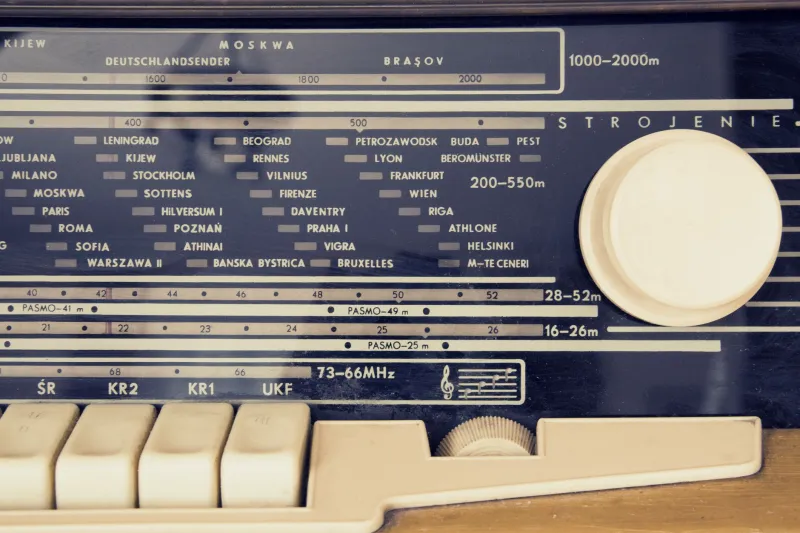
In the spring of 1938, Hazel Donovan was nineteen years old, newly arrived in Tulsa from a farming town so small it had one general store and a party line that served forty families. She didn't have a journalism degree. She barely had bus fare. What she had was a job offer from a regional radio station — KVOO — that needed someone to manage its switchboard during the afternoon shift.
The pay was modest. The hours were long. And for most people in her position, it would have been a dead end.
But Hazel had a gift that no communications school was teaching in 1938: she actually listened. Not just to the words people said, but to the pauses between them. The nervous laughter before a hard question. The way a caller's voice would drop when they were about to say something true.
She wasn't supposed to be part of the broadcast. She was supposed to route it.
The Education Nobody Planned
What Hazel discovered at that switchboard was something media scholars would spend decades trying to articulate: that radio is, at its core, a relationship. Every call that came through her board was a window into what ordinary Americans were thinking, worrying about, and desperate to hear addressed.
She started keeping notes. Not because anyone told her to — nobody was asking for the switchboard operator's observations. She just couldn't help herself. A farmer from outside Broken Arrow called three times in one week asking about drought relief programs the station had never covered. A mother from Sand Springs wanted to know if anyone was reporting on the school board's decision to cut hot lunch. A veteran called asking about benefits and stayed on the line for twenty minutes because, he said, he just needed to talk to someone who sounded like they cared.
Hazel cared. And she was writing all of it down.
By the end of her first year, she had filled two composition notebooks with what amounted to the most detailed audience research the station had never commissioned. She wasn't doing it strategically. She was doing it because she found people fascinating — and because the calls made her feel, in some unspoken way, responsible.
The Memo That Changed Everything
In the winter of 1940, she slipped a two-page memo under the station manager's door. It wasn't a formal report. It was more like a letter — handwritten, slightly apologetic in tone, but precise in its observations. She outlined six recurring topics that callers raised repeatedly that the station wasn't covering. Agricultural credit. Local school funding. The mental health of returning veterans from earlier conflicts. Stories that weren't coming out of Washington, but out of kitchen tables across northeastern Oklahoma.
The station manager, a pragmatic man named Gerald Fitch, could have dismissed it. Instead, he called her into his office and asked her one question: "Can you write this up for the morning team?"
She said yes before she fully understood what she was agreeing to.
Within six months, Hazel was contributing story ideas to the morning news block. Within a year, she was writing copy. Not because she'd asked for a promotion, but because she had something nobody else in that building had: two years of unfiltered, unmediated access to what the audience actually wanted to know.
Proximity as Power
This is the part of Hazel Donovan's story that tends to get lost when people talk about the so-called gatekeepers of American media. The assumption has always been that influence flows from credentials — from J-school pedigrees and network connections and the right internships. But Hazel's career is a reminder that proximity to the infrastructure of communication can be just as powerful as any diploma.
She was at the center of every conversation that passed through that station. She knew which stories landed and which ones fell flat. She knew when a host was losing the audience because she could hear it in the quality of the incoming calls — fewer of them, shorter, more confused. She had a dashboard for public trust that no one else had thought to build.
By 1947, she was KVOO's news director. By 1952, she had moved to a CBS affiliate in Kansas City, where she became one of the first women in the region to anchor an evening news broadcast — a fact that was treated as mildly scandalous at the time and is largely forgotten today.
She never made it to a national network. That's probably why her name doesn't appear in most broadcasting histories. But in the markets where she worked — Tulsa, Kansas City, later Des Moines — she was, for a generation of listeners, the voice they trusted most.
What the Switchboard Knew
There's a temptation to frame Hazel Donovan's story as a bootstraps narrative — the plucky girl who worked her way up from the phones. And sure, that's part of it. But the more interesting story is about what the switchboard itself taught her.
Most journalists in her era came to their work with a theory about the audience. Hazel came to it with data — messy, handwritten, deeply human data accumulated over years of just picking up the line and saying hello. She never stopped thinking of broadcasting as fundamentally a conversation, not a performance. And in an industry that was increasingly tempted by the performance, that made her unusual.
She retired in 1971. In her last interview, given to a journalism student at Drake University who was writing a paper on women in regional broadcasting, she was asked what she thought the most important skill in news was.
"Listening," she said. "Not to the people you're interviewing. To the people you're not."
It wasn't a famous quote. Nobody put it on a poster. But if you've ever worked in media and felt the gap between what you're covering and what your audience actually needs — you know exactly what she meant.