Static and Spirits: The Outlaw Who Hijacked America's Airwaves

The Night Everything Changed
Tommy Morrison was running late for his own raid. The bootlegger had spent the evening moving cases of Canadian whiskey through Detroit's back alleys when he heard the sirens converging on his warehouse. By the time he arrived, federal agents were already hauling out his inventory—but they'd left behind something that would prove far more valuable than any bottle of illegal liquor.
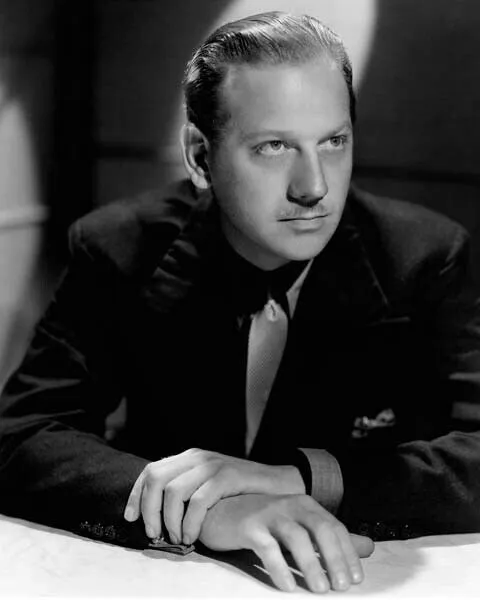
 Photo: Tommy Morrison, via cdn.sanity.io
Sitting forgotten in the corner was a crude radio transmitter, abandoned by its previous owner when Morrison bought the building. As the agents argued over evidence, Morrison found himself staring at the strange contraption of wires and vacuum tubes. He'd never seen anything like it.
"What's that thing do?" he asked Agent Peters, who was cataloguing the seized goods.
"Sends voices through the air," Peters replied dismissively. "Waste of time, if you ask me."
Tommy Morrison disagreed.
From Bottles to Broadcasts
Most entrepreneurs discover their calling through careful planning or inherited passion. Morrison stumbled into his through federal prosecution. While serving six months for liquor violations, he spent every free moment in the prison library, devouring every book on electrical engineering he could find.
His cellmate, a former telephone company engineer named Eddie Walsh, became his unwitting professor. "Tommy would ask me questions that kept me up half the night," Walsh later recalled. "He wanted to understand how sound traveled, how signals worked, how you could reach people you'd never met."
What Morrison grasped intuitively was something that legitimate businessmen were missing: radio wasn't just a novelty—it was the most powerful distribution network ever invented.
The Bootlegger's Advantage
When Morrison was released in early 1924, he faced the same challenge that had driven him to bootlegging in the first place: how to build a business when you're locked out of legitimate opportunities. But this time, he had an edge that Harvard Business School couldn't teach.
Running liquor had made Morrison an expert in logistics, timing, and reading people. He understood supply chains, customer psychology, and how to operate under pressure. Most importantly, he knew how to stay one step ahead of authorities—skills that translated perfectly to the Wild West atmosphere of early radio.
While established companies debated the proper protocols for broadcasting, Morrison was already on the air. He set up his transmitter in the basement of a legitimate electronics store, using the owner's amateur radio license as cover. His first broadcast was a reading of baseball scores, delivered in the same calm voice he'd once used to negotiate with speakeasy owners.
The response was immediate and overwhelming.
Building an Empire on Static
Morrison's station, WJZZ, officially launched in September 1924 with a programming philosophy that would revolutionize American entertainment: give people what they actually wanted to hear, not what you thought they should want to hear.
While other stations broadcast classical music and educational lectures, Morrison offered jazz, comedy, and serialized detective stories. He hired former vaudeville performers who couldn't find work elsewhere and gave them complete creative freedom. His evening variety show became the most popular program in the Midwest.
"Tommy understood something the suits didn't," remembered singer Clara Williams, one of WJZZ's first regular performers. "Radio wasn't about being respectable. It was about being real."
The station's success attracted attention from larger networks, but Morrison had learned from his bootlegging days never to depend on anyone else's infrastructure. Instead of selling out, he began acquiring other small stations across the region, building America's first truly independent radio network.
The Skills That Built an Industry
By 1930, Morrison controlled seventeen stations from Chicago to Buffalo. His network specialized in programming that mainstream broadcasters avoided: blues music, immigrant-language shows, and news that actually reflected working-class concerns.
His criminal background, rather than being a liability, had taught him lessons that served him perfectly in the chaotic early days of radio. He understood how to operate in gray legal areas, how to move quickly when opportunities arose, and how to build loyalty among people who felt ignored by establishment institutions.
When the Great Depression hit, Morrison's network thrived while others struggled. His programming spoke directly to Americans who were losing faith in traditional authority figures. His news shows didn't sugar-coat economic realities, and his entertainment programs offered genuine escape rather than condescending uplift.
The Unlikely Pioneer
Tommy Morrison died in 1952, having transformed himself from a small-time criminal into one of America's most influential media pioneers. His network had grown to include television stations and had helped launch the careers of dozens of performers who would become household names.
At his funeral, former federal agent Peters—the same man who had dismissed radio as a "waste of time" during that 1923 raid—delivered a surprising eulogy: "Tommy Morrison understood something the rest of us missed. Sometimes the people who build the future are the ones who never learned they weren't supposed to try."
Morrison's story reminds us that innovation often comes from the margins, from people who approach problems without preconceptions about how things are "supposed" to work. His bootlegging background didn't disqualify him from building a media empire—it gave him exactly the skills he needed to succeed where others failed.
In an industry that would eventually be dominated by corporate giants, Morrison proved that sometimes the best preparation for the future is learning to thrive when all the rules are being written as you go.