The Master Counterfeiter Who Fooled the Reich: Inside History's Most Dangerous Print Shop
The Printer Who Couldn't Stop Breaking the Law
In 1942, Adolf Burger was exactly the kind of criminal the Third Reich wanted to eliminate. The 24-year-old Slovak printer had been caught red-handed forging identity documents, helping Jewish families escape deportation. But instead of sending him straight to the gas chambers, the Nazis had a different plan for Burger's particular set of skills.
 Photo: Adolf Burger, via www.reier.de
They needed him to commit the perfect crime.
Operation Bernhard: The Reich's Secret Money Factory
Burger found himself transferred to Sachsenhausen concentration camp, not for execution, but for employment. The SS had launched Operation Bernhard, an unprecedented attempt to destroy Allied economies by flooding them with perfect counterfeit currency. They needed the best forgers in Europe to pull it off.
 Photo: Sachsenhausen concentration camp, via i.etsystatic.com
The irony wasn't lost on Burger. The same skills that had made him a criminal in Nazi eyes—his ability to replicate official documents with stunning precision—now made him invaluable to their war effort. He was assigned to Barrack 18, a secret workshop where 140 of Europe's most skilled counterfeiters worked under armed guard.
Their mission: forge British pounds and American dollars so perfect that even bank experts couldn't detect them.
The Forger's Dilemma
Burger faced an impossible choice. Refuse to cooperate, and he'd be shot. Work too well, and he'd help finance the regime that was murdering his people. Work poorly, and he'd be discovered and executed anyway.
So he chose a third option: sabotage from within.
While his fellow prisoners focused on survival, Burger began documenting everything. He memorized production numbers, sketched equipment designs, and tracked the operation's scope. He realized he was witnessing something unprecedented—a state-sponsored counterfeiting operation that could destabilize global finance.
The Perfect Crime That Almost Worked
The counterfeit British pounds produced in Barrack 18 were so flawless that the Bank of England later admitted they couldn't distinguish them from genuine currency. The operation printed over £130 million in fake notes—equivalent to billions today. Nazi agents successfully passed the currency in Switzerland, Turkey, and across occupied Europe.
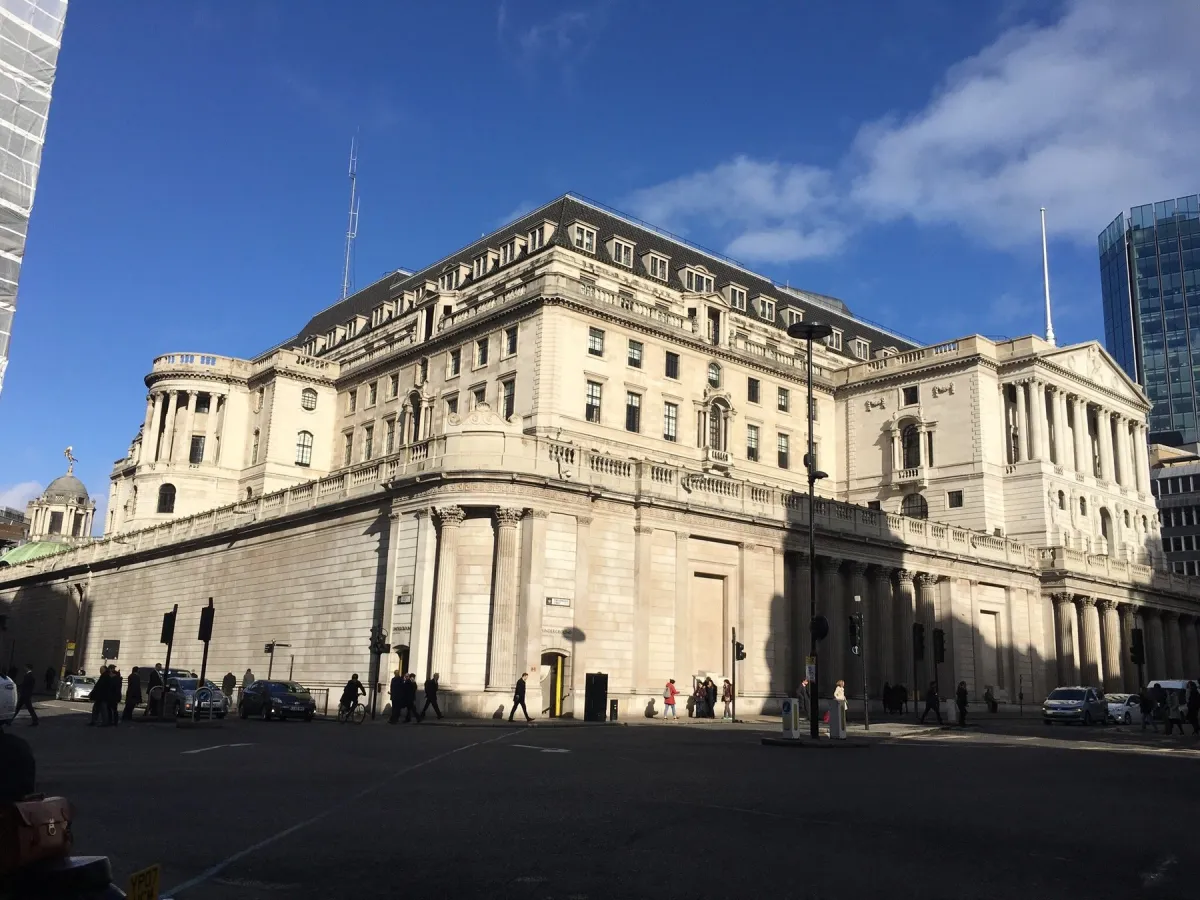 Photo: Bank of England, via dynamic-media-cdn.tripadvisor.com
But Burger and his fellow prisoners found subtle ways to resist. They introduced microscopic flaws, delayed production schedules, and "accidentally" ruined plates. When liberation came in 1945, Burger had accumulated enough evidence to expose the entire operation to Allied investigators.
From Criminal to Key Witness
After the war, Burger's documentation proved crucial in understanding how close the Nazis had come to economic warfare success. His testimony helped prosecute war criminals and revealed how the Reich had planned to use counterfeiting as a weapon of mass economic destruction.
The man who started as a small-time forger had become one of history's most important witnesses to financial warfare. His criminal skills, originally used to save individual lives, ultimately helped expose a plot that could have destabilized the entire Allied war effort.
The Unlikely Hero's Legacy
Burger survived to tell his story, living until 2016 and becoming a powerful voice against Holocaust denial. He often reflected on the strange path that led him from criminal to hero: "Sometimes the law is wrong, and breaking it is the only moral choice."
His story reveals how extraordinary circumstances can transform our understanding of right and wrong. The skills that made Burger a criminal in peacetime made him a resistance fighter during war. The same hands that forged documents to save Jewish families were forced to create currency that funded genocide—but never stopped working against the machine that enslaved them.
In the end, Adolf Burger proved that sometimes the most unlikely heroes are hiding in the most unexpected places. His criminal expertise became his moral weapon, and his willingness to document evil while surrounded by it helped ensure that history would remember not just the crime, but the criminals who refused to let it succeed completely.