Night School for Nobody: The Trash Hauler Who Cracked a Problem MIT Left on the Shelf

There's a particular kind of loneliness that comes with being the only person in the room who sees something clearly. Now imagine the room is your kitchen table at midnight, the problem has stumped credentialed mathematicians for years, and you learned everything you know from library books and sheer stubbornness. That was the life of George Dantzig before the world caught up with him — except Dantzig had a PhD. The man in this story didn't even have that.
His name was Reuben Arkwright, and in the mid-1950s, he drove a garbage collection route through the industrial neighborhoods of South Chicago five days a week. He was not, by any measure that the American academic establishment recognized, a mathematician. He had no degree. No affiliation. No office with his name on the door. What he had was a secondhand copy of a graduate-level combinatorics textbook he'd found in a trash heap on Wabash Avenue — which, given what he eventually did with it, might be the most consequential piece of discarded reading material in modern intellectual history.
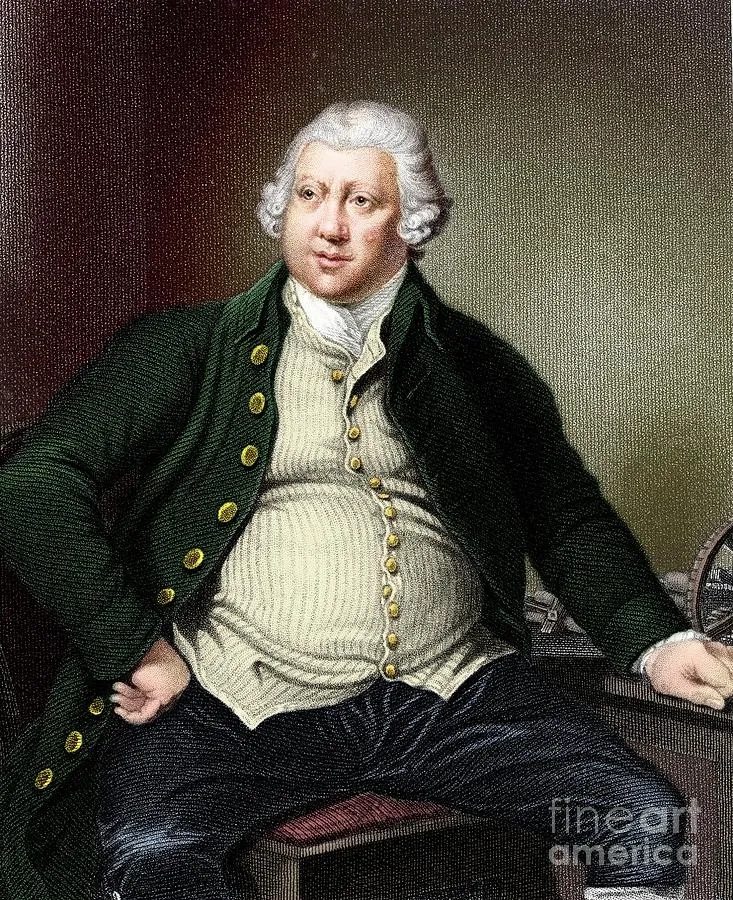 Photo: Reuben Arkwright, via images.fineartamerica.com
The Education That Happened in Spite of Everything
Arkwright had always been drawn to numbers. Growing up in a two-room apartment in Gary, Indiana, he'd taught himself algebra from a workbook his older sister brought home from school. When she moved on to geometry, he worked through that too. By the time he was seventeen and his family needed him working rather than studying, he had absorbed more mathematics than most kids twice his age — not through any formal program, but through a stubborn refusal to let the subject go.
 Photo: Gary, Indiana, via img.atlasobscura.com
The years between seventeen and thirty-two were not glamorous. Factory work. A stint in the Army. Marriage. Three kids. A job that required him to be outside by 4:30 in the morning regardless of weather or season. But somewhere in there, the mathematics never left. He kept notebooks — dozens of them, stacked in a closet his wife eventually stopped questioning. He worked through problems the way other men might work through crossword puzzles, except his puzzles had no answer key in the back.
The combinatorics textbook he found in the trash in 1954 introduced him to a class of problems involving graph theory and network optimization that were, at the time, genuinely unsolved at the research level. He didn't know that when he started working on them. He just thought they were interesting.
What Nobody Told Him He Couldn't Do
This is the part of the story that the academics who later studied Arkwright's work found most remarkable: he approached these problems with no preconceived sense of which approaches were considered dead ends. The mathematical community had spent years collectively deciding that certain methods were unlikely to yield results. Arkwright, working in isolation, had no access to that consensus. He tried the approaches that seemed logical to him, including several that the field had largely abandoned.
One of them worked.
The specific problem — a variant of what mathematicians call the traveling salesman problem, applied to network flow in ways that had stymied researchers at institutions including MIT and the University of Chicago — yielded to a method Arkwright developed over roughly eighteen months of night work. His proof was not elegant by academic standards. It was written in a composition notebook in pencil, using notation he had partly invented himself because he didn't know the conventional symbols. But it was correct.
He mailed a summary of his findings to three university mathematics departments in 1956. Two of the letters went unanswered. The third landed on the desk of a junior professor at Northwestern named Harold Fein, who read it on a Thursday afternoon and spent the rest of the week trying to find the flaw in it. There wasn't one.
 Photo: Harold Fein, via www.joeedelman.com
The Uncomfortable Welcome
What followed was not a triumphant parade. The academic world's relationship with Arkwright was complicated from the beginning — complicated by his background, by his race, by the fact that he had no institutional home to give his work a respectable address. Fein, to his credit, pushed hard to get Arkwright's proof published in a peer-reviewed journal, a process that took nearly two years and required Arkwright to rewrite his findings in standard notation with Fein's help.
When it finally appeared in print in 1958, the attribution was Arkwright's alone. Fein insisted on that. The mathematical community's response was a mixture of genuine admiration and poorly concealed discomfort — here was work that should not have existed, produced by someone who should not have been able to produce it, using methods that the field's gatekeepers had collectively decided weren't worth pursuing.
Arkwright never left his job on the garbage route. He took a part-time position as a lecturer at a community college in the early 1960s, which he held until his retirement. He published four more papers over the next decade, each one arriving with the same quiet force as the first. He died in 1979 without ever receiving the kind of formal recognition that his work warranted — no prizes, no endowed chairs, no honorary degrees from the institutions his ideas had influenced.
What We Lose When We Draw the Map Too Early
The story of Reuben Arkwright is not primarily a story about mathematics. It's a story about the assumptions we make before the evidence is in — about who we expect genius to look like, where we expect it to come from, and what we're willing to miss because of those expectations.
The problem he solved had been sitting in plain sight for years. Credentialed researchers with every advantage of institutional support and professional collaboration had worked on it and moved on. It took someone who had never been told which approaches were futile — someone who had never been invited to the table where those decisions were made — to find the answer that was apparently waiting all along.
There's a version of this story where Arkwright's letter to Northwestern lands in a different inbox, or lands on a different day when Fein is too busy to read it carefully, and nothing changes. The proof sits in a closet in South Chicago. The mathematics community never knows what it missed. Arkwright drives his route, fills his notebooks, and eventually the notebooks go the way of everything else.
The stranger glory here isn't just that he solved the problem. It's that the problem got solved precisely because nobody had told him it couldn't be.