Threads of Memory: The Quilter Who Preserved a World Nobody Else Thought to Save
The Historian Nobody Recognized
In 1895, when Harriet Powers walked into the Cotton States Exposition in Atlanta carrying a carefully wrapped bundle, most visitors assumed she was just another rural woman hoping to sell handicrafts to city folk. They had no idea they were looking at one of the most sophisticated historical documents of 19th-century American life — sewn entirely from memory by a woman who couldn't read or write.
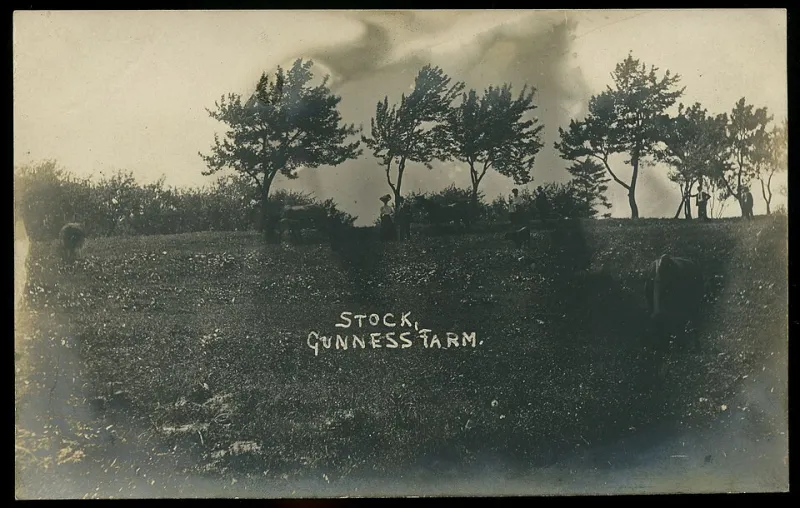
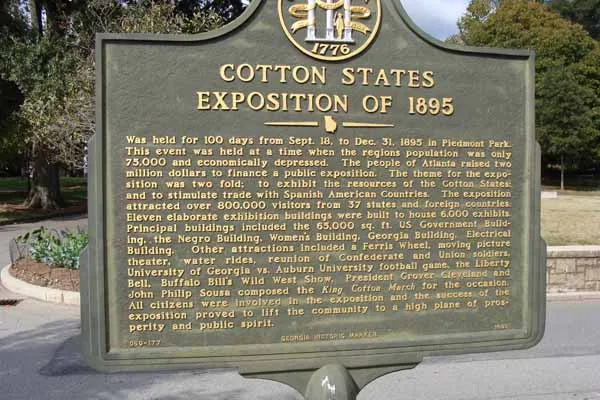 Photo: Cotton States Exposition, via georgiahistory.com
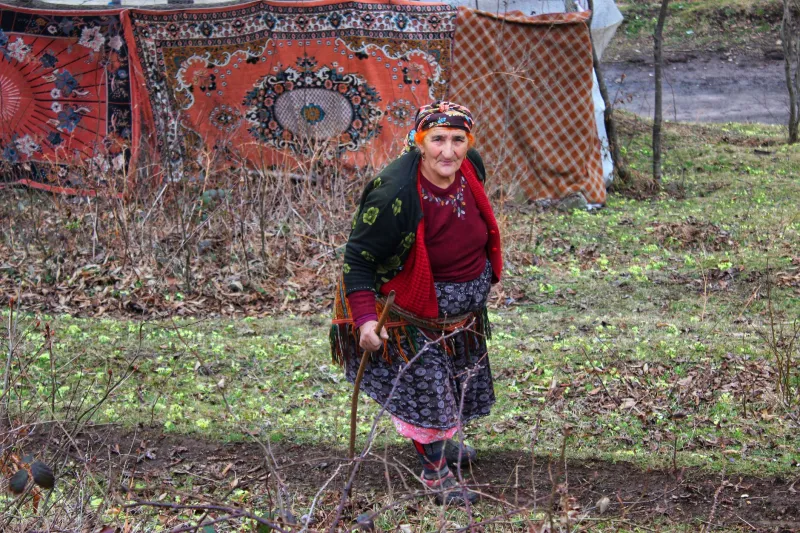
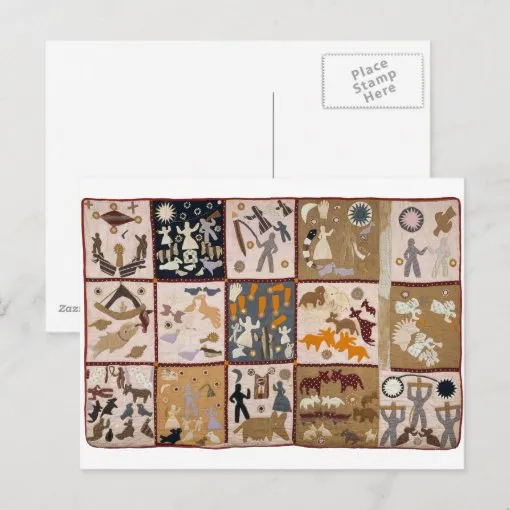 Photo: Harriet Powers, via rlv.zcache.com
Powers had spent decades creating narrative quilts that captured the texture of everyday life in rural Georgia with a precision that would have impressed any anthropologist. Her fabric panels documented everything from local weather patterns to social hierarchies, from religious practices to agricultural techniques. She preserved details that no photographer thought to capture, no journalist considered worth recording, no historian believed was important enough to save.
She did it all with needle and thread.
Born into slavery in 1837, Powers learned quilting from her mother and grandmother, women who understood that fabric could carry stories across generations when paper and ink weren't available. But Powers took this tradition in a direction that surprised even her family. Instead of creating traditional patterns, she began designing pictorial quilts that functioned like visual newspapers, capturing specific events and social dynamics with documentary accuracy.
Reading the Fabric Archive
Powers' quilts operated on multiple levels simultaneously. At first glance, they looked like folk art — colorful, naive, charming. But closer examination revealed an incredibly sophisticated system of visual storytelling that encoded detailed information about rural Southern life.
One panel might show a church gathering, but Powers included specific details about who sat where, what clothes people wore for different occasions, how social hierarchies played out in public spaces. Another panel documented a severe winter, but Powers recorded not just the weather but how the community responded — which families shared resources, how people adapted their daily routines, what survival strategies actually worked.
The quilts functioned as both historical record and social commentary. Powers had opinions about the events she depicted, and she embedded those perspectives in her visual narratives through subtle choices about composition, color, and symbolic detail.
"Harriet's quilts were like newspapers, but better," remembered her neighbor, Sarah Washington, in a 1920 interview. "Newspapers told you what happened. Harriet's quilts told you what it felt like when it happened."
The Language of Necessity
Powers developed her documentary approach partly out of necessity. As an enslaved person and later as a poor rural Black woman, she had limited access to formal education and no expectation that her perspective on historical events would be valued by mainstream institutions. But she understood that her community's experiences were worth preserving, even if nobody else seemed interested.
Quilting gave her a medium that was both practical and artistic. The quilts served as bedding for her family while simultaneously functioning as historical archives. Powers could document her community's life without appearing to challenge social expectations about what kinds of knowledge Black women were supposed to possess.
The technique also allowed Powers to embed multiple layers of meaning in single images. A quilt panel showing a religious revival might also comment on economic conditions, social tensions, or political developments. Someone viewing the quilt casually might see only the religious scene, while community members could read the deeper social commentary.
This encoding wasn't accidental. Powers understood that her historical perspective might be controversial, so she developed visual strategies that allowed her to preserve complex truths while maintaining plausible deniability about her intentions.
The Exposition Discovery
When Jennie Smith, a white art teacher from Athens, encountered Powers' quilts at the 1895 exposition, she immediately recognized that she was seeing something unprecedented. Smith had studied European textile traditions and American folk art, but she'd never encountered anything like Powers' narrative documentaries.
"These aren't just quilts," Smith wrote to a colleague. "They're historical records created by someone with an extraordinary eye for social detail. This woman has documented aspects of Southern life that I've never seen captured anywhere else."
Smith convinced Powers to sell her one quilt and spent hours interviewing her about the stories embedded in the fabric. What Smith discovered amazed her: Powers could explain the historical context behind every figure, every scene, every symbolic detail. The quilts weren't folk art created from imagination — they were precise historical documents created by someone who had witnessed the events she depicted.
Smith began documenting Powers' narrative techniques and encouraging other scholars to take her work seriously. It was an uphill battle. Most academics in the 1890s couldn't conceive that important historical information might be preserved in quilts made by an illiterate Black woman.
The Archive They Almost Lost
Powers created at least fifteen major narrative quilts during her lifetime, but only two survive today. The others were lost to time, poverty, and a culture that didn't recognize their historical value. Family members used them as everyday bedding until they wore out. Some were sold to collectors who valued them as curiosities but didn't understand their documentary significance.
The two surviving quilts — now in the Smithsonian and the Museum of Fine Arts, Boston — offer tantalizing glimpses of what was lost. They document specific historical events, including a meteor shower in 1833, a particularly harsh winter in the 1870s, and various religious and social gatherings. But they also preserve details about daily life that appear nowhere else in the historical record.
Powers recorded how people actually lived, not how they were supposed to live according to social conventions. Her quilts show the gap between official narratives about Southern life and the complex realities that people actually experienced.
The Knowledge That Survived
What makes Powers' work remarkable isn't just its historical value — it's the sophistication of her documentary approach. She understood that preserving history meant more than recording events; it meant capturing the emotional and social context that gave those events meaning.
Powers' quilts document the texture of rural Southern life with an anthropologist's eye for significant detail. She recorded how people used space, how they organized social gatherings, how they responded to crisis, how they celebrated success. She preserved information about daily routines, seasonal patterns, community relationships, and survival strategies.
Most importantly, she documented the perspectives and experiences of people whose voices were systematically excluded from official historical records. Powers' quilts preserve the viewpoint of rural Black women on major historical events — a perspective that would have vanished entirely without her fabric archives.
The Medium as the Message
Powers' choice of quilting as her documentary medium wasn't just practical — it was strategic. Quilts were associated with domestic life and women's work, which meant they flew under the radar of people who might have found her historical perspective threatening. The medium allowed her to preserve controversial truths while appearing to engage in harmless handicraft.
The collaborative nature of quilting also meant that Powers' historical perspective was shaped by input from other women in her community. Her quilts represent not just one person's view of events, but a collective memory preserved in fabric.
This collaborative aspect makes Powers' quilts even more valuable as historical documents. They preserve community perspectives on historical events, showing how ordinary people understood and interpreted the major developments of their time.
The Recognition That Came Too Late
By the time scholars began to recognize the historical significance of Powers' work in the 1960s, most of her quilts had already been lost. The surviving examples sparked new interest in textile arts as historical documentation, but it was too late to preserve the full scope of what Powers had created.
Today, Powers is recognized as one of the most important American folk artists and as a pioneering documentary historian. Her techniques influenced generations of textile artists who understood that fabric could carry complex narratives about social and historical experience.
But recognition came decades after Powers' death in 1910. During her lifetime, the broader culture couldn't conceive that someone like her might be creating work of lasting historical and artistic importance.
The Stories That Endure
Powers' legacy reminds us that the most important historical records sometimes come from the most unexpected sources. While official historians focused on political events and military campaigns, Powers was documenting the daily realities that actually shaped most people's lives.
Her quilts preserve truths that would have vanished without her patient work of documentation. They show us how ordinary people experienced historical change, how communities responded to crisis, how social relationships actually functioned beneath the surface of official narratives.
Most importantly, Powers proved that the tools society gives women as consolation prizes — needle and thread, domestic crafts, "women's work" — can become instruments of profound historical preservation when wielded by someone who understands their potential.
In a world that told her that her perspective didn't matter, Harriet Powers stitched together an archive that would outlast most of the official records of her time. She understood that history isn't just what happens — it's what gets remembered. And sometimes, the most important remembering happens one careful stitch at a time.