From Georgia Red Clay to a Million-Dollar Empire: The Barber Who Buried Jim Crow in Style
The Boy Who Learned to Read a Room
Alonzo Herndon arrived in Atlanta in the 1880s with the kind of résumé that should have guaranteed obscurity. Born enslaved in Social Circle, Georgia, in 1858, he spent his early years sharecropping red clay fields for wages so meager they barely registered as freedom. He was young, Black, poor, and living in a state that had made an art form out of closing doors.
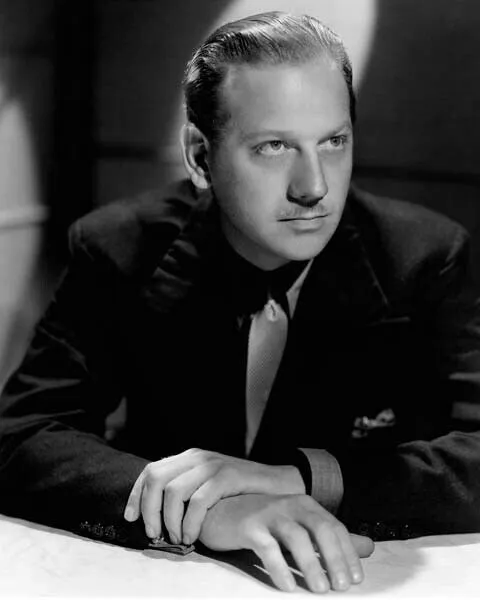
 Photo: Alonzo Herndon, via m.media-amazon.com
But Herndon had one skill that nobody could legislate away: he understood people. Specifically, he understood what people wanted when they sat down in a barber's chair. They wanted, for a few minutes at least, to feel like somebody.
He learned the trade in Jonesboro and worked his way north toward Atlanta, and by the time he opened his first shop on Marietta Street in 1878, he already knew something his competitors didn't. A haircut wasn't just a service. It was a statement.
Marble Floors and a Message
Herndon didn't build barbershops. He built theaters of aspiration.
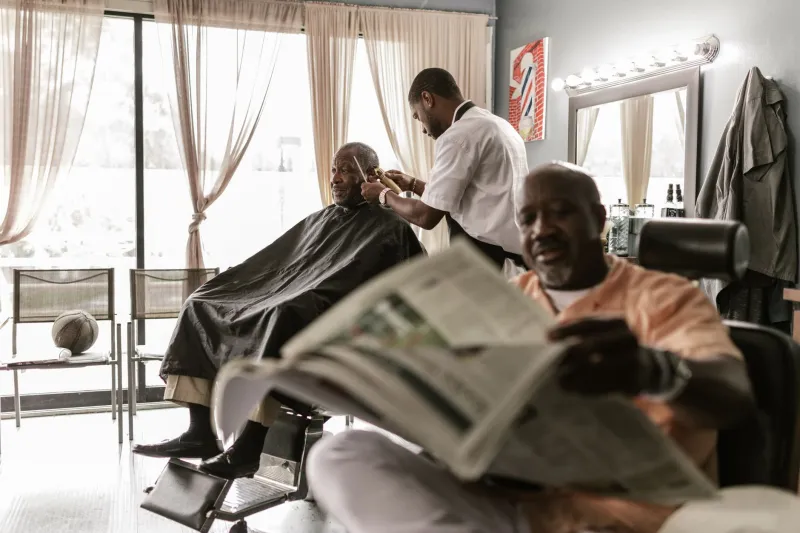
His flagship establishment — the Crystal Palace Barbershop on Peachtree Street — was the kind of place that made you straighten your back when you walked through the door. Mahogany furniture. Porcelain fixtures. Twenty-five barber chairs staffed by the most skilled craftsmen he could recruit. Chandeliers that caught the afternoon light and threw it back at you like a compliment.
 Photo: Crystal Palace Barbershop, via cdn.webshopapp.com
The clientele was almost exclusively white — wealthy white Atlantans who paid premium prices to be groomed in surroundings that rivaled anything in New York or Chicago. They came because the service was impeccable. They stayed because Herndon had built something genuinely beautiful, and beauty, it turned out, was a more powerful social solvent than anyone had anticipated.
Here was the audacity of it: in a city enforcing the full misery of Jim Crow, Herndon had created a space where his dignity was structurally embedded in the architecture. You couldn't dismiss a man who owned marble floors. You couldn't condescend to someone whose establishment made you feel like a guest.
By the turn of the century, his barbering operations were generating the kind of profits that most Atlanta businessmen — white or Black — could only imagine.
The Pivot That Changed Everything
Wealth, Herndon understood, was only as durable as the institution protecting it. Cash could be taken. Property could be burned. But an insurance company — a company built on community trust and actuarial discipline — was something harder to destroy.
In 1905, he purchased a struggling fraternal benefit society called the Atlanta Mutual Insurance Association for a reported $140. That figure is almost comically small given what followed.
Herndon rebuilt it from the inside out, applying the same philosophy that had transformed his barbershops: excellence as armor, elegance as argument. He hired competent managers, instituted rigorous financial practices, and relentlessly expanded the company's reach across the South. The business was renamed Atlanta Life Insurance Company, and it grew into one of the most significant Black-owned financial institutions in American history.
The timing was not accidental. In the Jim Crow South, Black Americans were systematically excluded from white insurance companies or charged predatory rates. Atlanta Life stepped into that gap and stayed there — offering policies to families who had never had a financial safety net in their lives. At its peak, the company operated in multiple states and protected hundreds of thousands of policyholders.
Herndon hadn't just built a company. He had built infrastructure for Black economic survival.
The Cost of Dignity in a Hostile World
None of this happened in a vacuum. The Atlanta of Alonzo Herndon's rise was also the Atlanta of the 1906 race riot — four days of white mob violence that left dozens of Black residents dead, hundreds injured, and entire neighborhoods in ruins.
Herndon survived it. His businesses survived it. But survival in that context required a kind of constant, exhausting calculation that his white contemporaries never had to make. Every expansion of his empire was also a negotiation with a city that resented his success even as it patronized his barbershops. Every public appearance was a performance of precisely calibrated dignity — too assertive and he'd invite violence, too deferential and he'd invite exploitation.
He navigated it by being, in the most strategic sense, irreplaceable. His shops employed Black workers in skilled, well-paying positions. His insurance company provided services that no white institution would offer. He built a mansion on University Place — a home so architecturally distinguished it now operates as a museum — that made a quiet, permanent argument about Black achievement in America.
What the Ledger Didn't Show
When Alonzo Herndon died in 1927, his estate was valued at over a million dollars — making him, by most accounts, one of the wealthiest Black men in the United States at the time. The Atlanta Life Insurance Company he founded went on to manage assets in the hundreds of millions and remains operational today, more than a century after he bought it for the price of a used bicycle.
But the ledger doesn't capture the stranger glory of what he actually did. He took the tools available to him — a razor, a chair, a room full of people who needed to feel respected — and built an empire in the cracks of a system designed to produce exactly zero empires for men like him.
He started in a field. He ended in a mansion. And the distance between those two points was measured not in luck or accident, but in the kind of audacity that looks, from a distance, almost like something else entirely.
Almost like genius.