He Fixed Washing Machines. Then He Fixed Hollywood.
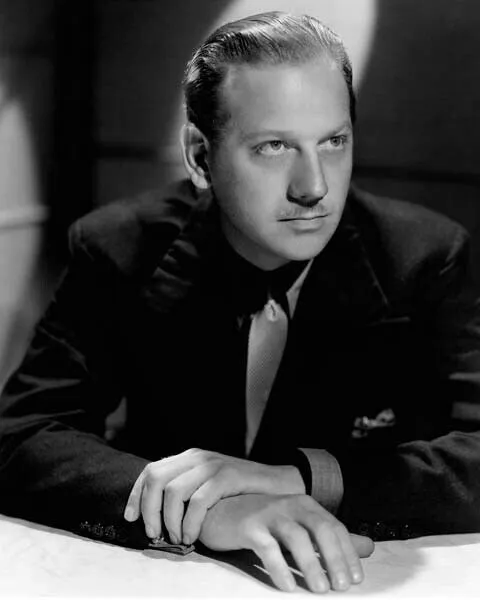
Photo: N/A studio, Public domain, via Wikimedia Commons
The first time most people hear Douglas Shearer's name, they assume the conversation is about his sister. Norma Shearer was one of the biggest movie stars of Hollywood's golden age — glamorous, Academy Award-winning, impossible to ignore. Douglas was the quiet one. The technical one. The brother who liked taking things apart to see how they worked.
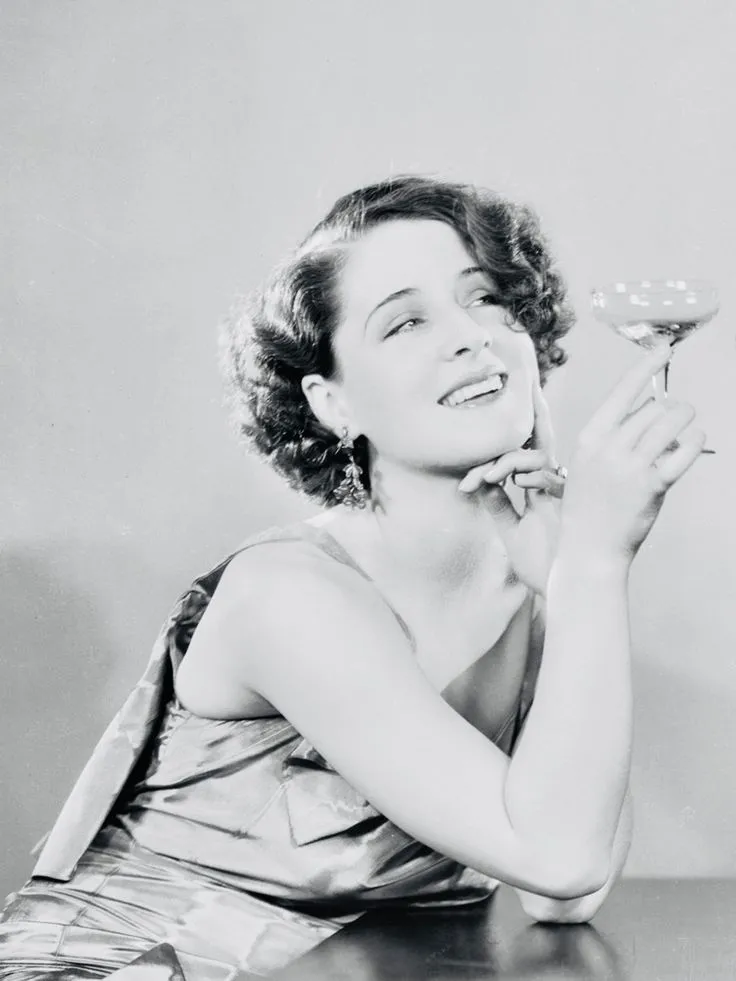 Photo: Norma Shearer, via i.pinimg.com
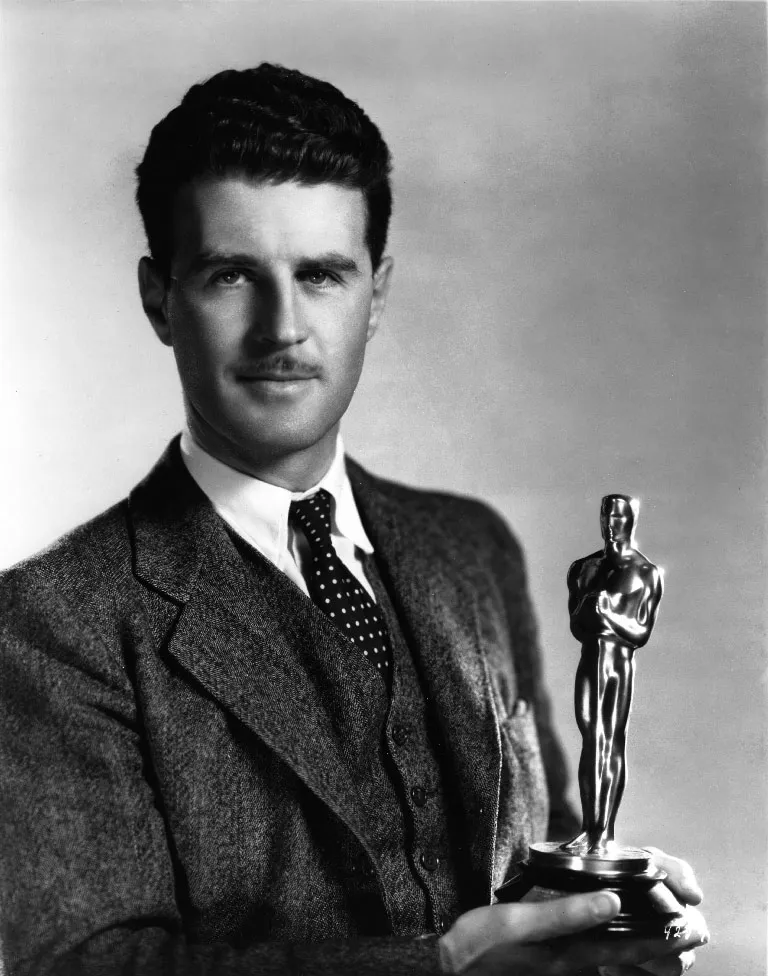 Photo: Douglas Shearer, via www.canadashistory.ca
He won twelve Academy Awards. Norma won one.
A Childhood Built on Broken Things
Douglas Shearer was born in 1899 in Westmount, Quebec — a well-to-do suburb of Montreal that nonetheless left him unimpressed with comfort. While his sister pursued performance, Douglas gravitated toward machinery. He was the kid who couldn't leave a broken appliance alone, who found more satisfaction in diagnosing a faulty motor than in anything a classroom offered.
 Photo: Westmount, Quebec, via www.westmountmag.ca
By his late teens, he was working as an appliance repairman, and he was genuinely good at it. Washing machines, in particular, became something of a specialty. The wringer washer was the dominant domestic appliance of the era — a mechanical beast of belts, drums, and motors that vibrated, rattled, and failed in highly specific ways. Shearer learned to read those failures the way a doctor reads symptoms. A particular kind of vibration meant one thing. A certain frequency of rattle meant another. He developed a tactile understanding of sound and resonance that was entirely self-taught and entirely practical.
Nobody in Hollywood was teaching that. Nobody in Hollywood even knew they needed it.
An Unlikely Invitation
When Norma's career began pulling her toward California in the mid-1920s, Douglas followed — not to chase his own fame, but because that's what the Shearer family did. They moved together, looked out for each other, figured things out as they went.
He landed at MGM almost by accident, initially doing odd jobs around the studio. But 1927 changed everything. The release of The Jazz Singer — the first feature film with synchronized dialogue — sent Hollywood into a controlled panic. The silent era was ending, and nobody in the industry fully understood what was supposed to replace it. Sound was new, terrifying, and technically chaotic. Microphones picked up everything wrong. Speakers distorted. Sets that had worked beautifully for silent films were acoustical nightmares.
MGM needed someone to make sense of it. They looked around and found Douglas Shearer, the appliance repairman who understood vibration.
It was, in retrospect, an almost comically perfect match.
Listening Differently
What made Shearer extraordinary wasn't a background in music theory or acoustics. It was something more fundamental: he listened to problems rather than to expectations. When other people heard a sound and judged it against what they thought a movie should sound like, Shearer heard a sound and immediately started diagnosing why it wasn't right and how to fix it.
He approached MGM's sound department the way he'd approached a misbehaving wringer washer — systematically, without ego, and with genuine curiosity about the mechanical truth underneath the surface problem.
His early innovations were practical rather than glamorous. He redesigned microphone placement to reduce the mechanical noise that early film sets generated. He developed techniques for recording dialogue that reduced the echo problems plaguing indoor shooting stages. He experimented obsessively with the relationship between recording equipment and playback systems, understanding that sound captured on set and sound experienced in a theater were two different animals that had to be carefully reconciled.
He also pushed hard for something the industry resisted at first: the idea that recorded sound quality wasn't a fixed limitation but an engineering problem that could be progressively solved. That mindset — rooted in the appliance shop philosophy that broken things can always be made to work better — would define his entire career.
Twelve Trophies and a Revolution
Shearer's Academy Award count tells part of the story. His first Oscar came in 1930, for his work on The Big House — the first Academy Award ever given in the sound recording category. He would go on to win eleven more, becoming the most decorated sound engineer in Hollywood history.
But the awards don't fully capture what he actually changed. Shearer's work at MGM through the 1930s, 40s, and 50s established the technical standards that the entire American film industry eventually adopted. His research into stereo sound for film was decades ahead of commercial application. He developed recording techniques that allowed dialogue, music, and ambient sound to coexist on a single track without one overwhelming the others — something that seems obvious now but was genuinely unsolved when he started working on it.
He also had a gift for explaining technical problems to people who had no interest in understanding them. Studio executives, directors, and producers who wanted sound to simply work found in Shearer a translator — someone who could take a complex acoustic failure and describe it in terms a non-engineer could act on. That skill, arguably, was as valuable as any of his technical innovations.
The Repairman's Philosophy
People who worked with Shearer at MGM consistently described the same quality: he never accepted "good enough." Not because he was difficult or precious about his work, but because his entire professional formation had been built around the idea that a machine either works correctly or it doesn't. There's no partial credit in appliance repair. The washer runs or it doesn't. The motor hums at the right frequency or it doesn't.
He brought that binary clarity to sound engineering at a moment when the industry was tempted to define "good enough" as "better than silence." Shearer refused the bargain. He kept pushing, kept tinkering, kept listening with the same focused attention he'd once applied to a rattling drum mechanism in some Quebec housewife's laundry room.
The irony is rich and worth sitting with: Hollywood's most technically sophisticated sound department was built by a man whose formal education in acoustics consisted entirely of diagnosing broken household appliances in rural Canada.
Norma got the glamour. Douglas got the craft. And the craft, it turned out, lasted longer.
He died in 1971, in Los Angeles — a city that had spent nearly half a century listening to movies the way he'd taught it to. His sister's films are still celebrated. His work is inside all of them, invisible and irreplaceable, doing exactly what he always wanted sound to do.
Working perfectly, and never drawing attention to itself.