Scar Tissue and Silk: The Designer Who Rebuilt American Fashion From the Inside Out

Photo: SUITCASE Magazine, CC BY-SA 3.0, via Wikimedia Commons
The American fashion industry has always had a complicated relationship with the body. It sells aspiration through fabric — the promise that the right cut, the right drape, the right silhouette can close the distance between who you are and who you want to be. It is an industry that has historically preferred its bodies smooth, symmetrical, and uncomplicated. Which makes what Vera Holloway did all the more remarkable.
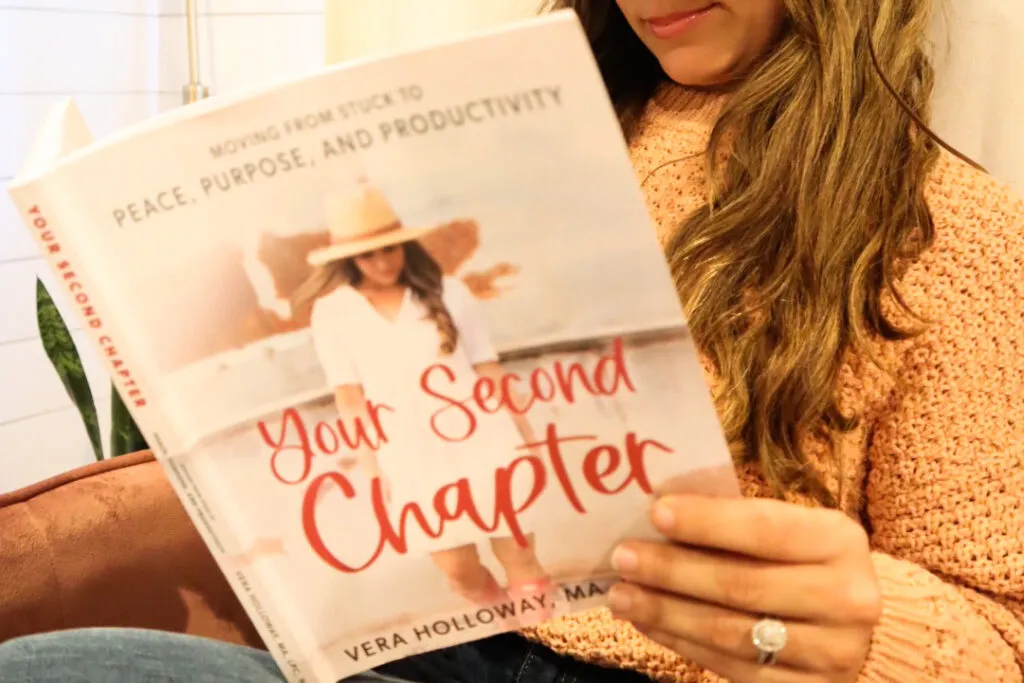 Photo: Vera Holloway, via veraholloway.com
In the summer of 1963, Holloway was twenty-nine years old and working as a junior designer at a mid-size garment house in New York's Seventh Avenue district. She was talented, ambitious, and by all accounts on the edge of something real. Then a gas explosion in her apartment building put her in a burn unit at Bellevue for the better part of a year and a half, and the career she had been building quietly fell apart without her.
Before the Fire
To understand what Holloway became, it helps to understand what she was before the accident — not because the before was so remarkable, but because it was so ordinary in exactly the right ways.
She had grown up in Cincinnati, the daughter of a seamstress who did alterations out of their home. She learned to handle fabric before she learned to ride a bike. By the time she arrived in New York in the late 1950s, she had a genuine feel for construction — for the way a garment moves with a body rather than against it — that set her apart from designers who came to clothes through drawing rather than making.
Her early work was competent and commercially minded. She designed sportswear, mostly. Clean lines. Practical cuts. Nothing that would make you stop on the street. She was building toward something, though she couldn't have told you exactly what. The explosion interrupted that process before she'd had time to find out where it was going.
Eighteen Months in a Different Body
The burns covered roughly forty percent of Holloway's body, concentrated on her left arm, shoulder, neck, and part of her face. The surgeries were extensive and the recovery was slow and painful in ways that don't translate easily into words. She has written about this period sparingly in the interviews she gave later in her career, and what she describes is less the physical ordeal — though that was real — than the cognitive shift that happened somewhere in the middle of it.
Lying in a hospital bed with limited mobility and a great deal of time, she started thinking about clothing differently. Not as aspiration or decoration, but as interface — the daily negotiation between a body and the world it moves through. She thought about what it meant to dress a body that didn't conform to the shapes that the industry built around. She thought about texture, about coverage, about the difference between hiding and choosing.
She also started sketching. Slowly at first, with her right hand while her left healed. The designs that emerged from those hospital notebooks were unlike anything she had done before.
The Aesthetic Nobody Had a Name For
When Holloway returned to the industry in 1965, she did not return to Seventh Avenue. She set up a small atelier in her apartment in the West Village and began producing a limited line of women's clothing that she sold through a single boutique in the neighborhood. The clothes were immediately unusual.
 Photo: West Village, via a.cdn-hotels.com
The silhouettes were generous without being formless — they moved with the body rather than mapping it. The layering was architectural, creating depth and dimension that drew the eye in unexpected directions. The textures were complex: matte against sheen, rough against smooth, structured panels alongside draped fabric. The effect was clothing that felt considered in a way that most American fashion of the era did not — less concerned with displaying the body than with dressing it, in the fullest sense of the word.
Fashion writers struggled to categorize what she was doing. Some called it sculptural. Some called it theatrical. A few, missing the point entirely, called it concealing. What it actually was, though nobody had the vocabulary for it at the time, was a complete rethinking of what American women's clothing could prioritize.
The boutique sold out within weeks. By 1967, she had a small but intensely loyal following. By 1970, she had a full collection showing in New York, and the industry that had moved on without her was paying close attention.
The Industry That Had to Catch Up
Holloway's influence on American fashion in the 1970s was significant but often uncredited in the ways that matter for posterity. The designers who came after her — particularly those who worked in the American sportswear tradition — absorbed her ideas about layering, texture, and the relationship between clothing and movement without always knowing where those ideas had originated.
What she had done, essentially, was shift the question. The dominant framework of fashion at the time asked: how do you display the body to its best advantage? Holloway's framework asked something different: how do you create clothing that serves the person wearing it, regardless of what that body looks like or how it moves? It sounds like a subtle distinction. The clothes it produces are not subtle at all.
She spoke about this directly only once, in a 1974 interview with a trade publication that didn't fully understand what it had. Asked whether her accident had influenced her work, she said something that has been quoted occasionally in the decades since: "I stopped designing for the body I used to have. That turned out to be the most useful thing that ever happened to my work."
What Surfaces Can't Tell You
Vera Holloway retired from active design in the late 1980s and spent her final years teaching at a fashion school in downtown Manhattan. She died in 2001. Her name does not appear in most standard histories of American fashion, which tend to organize themselves around the famous houses and the photographers who made them famous — around surfaces, in other words.
But the ideas she developed in a hospital bed and a West Village apartment — the conviction that clothing should negotiate with the body rather than demand things of it — those ideas are everywhere in what American women wear today. They arrived quietly, through influence and osmosis and the slow drift of aesthetic assumptions, which is how most genuine revolutions in taste actually happen.
The fashion industry is still obsessed with surfaces. It probably always will be. But somewhere inside that obsession, there's a counterargument that has been running quietly for sixty years, stitched into the lining of how Americans think about getting dressed. Vera Holloway put it there.