The Enslaved Healer Who Saved Colonial Boston: How African Knowledge Conquered a Deadly Epidemic

The Knowledge They Couldn't See
Boston in 1721 was a city under siege. Not from armies or pirates, but from something far more terrifying: smallpox. The disease had already killed nearly a thousand people, and the city's most respected doctors stood helpless, watching their patients die while muttering about "God's will" and "balancing the humors."
Meanwhile, in the household of Cotton Mather, one of Boston's most prominent Puritan ministers, an enslaved man named Onesimus was watching the panic with a mixture of sadness and frustration. He knew how to stop smallpox. He'd seen it done countless times in his homeland of West Africa. But in colonial Boston, enslaved people weren't supposed to know things that white doctors didn't.
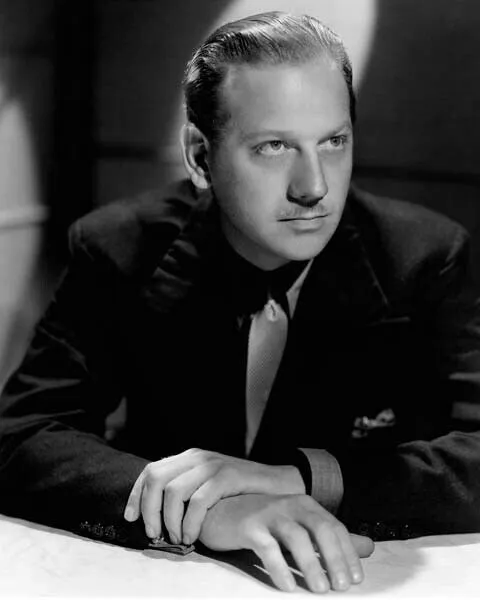
 Photo: Cotton Mather, via theluxurytravelexpert.com
Onesimus was about to prove them wrong.
The Man Who Remembered Home
Onesimus had been born in what is now Ghana or Senegal, where smallpox was as common as it was deadly. But West African healers had developed a technique called variolation – deliberately infecting healthy people with a mild form of the disease to protect them from the deadly version.
The process was elegant in its simplicity: healers would take pus from a smallpox victim's pustule and scratch it into the skin of a healthy person. The patient would develop a mild case of smallpox, recover quickly, and never catch the disease again. It wasn't perfect – about 2% of patients died from the procedure. But smallpox killed 30% of its victims, making variolation a life-saving gamble.
When Onesimus was captured and sold into slavery, he carried this knowledge across the Atlantic. But in Boston, his medical expertise was seen as worthless superstition. Until the epidemic made the impossible suddenly possible.
The Minister's Unlikely Alliance
Cotton Mather was many things – a Harvard-educated theologian, a prolific writer, and a man who'd supported the Salem witch trials. He was not known for listening to enslaved people. But as smallpox ravaged Boston, Mather grew desperate enough to ask Onesimus about diseases in Africa.
Onesimus described variolation in detail, explaining how it had protected entire villages from smallpox outbreaks. Mather was skeptical but intrigued. He'd read about similar techniques in reports from Turkish doctors, but hearing about it from someone who'd actually witnessed it was different.
Mather faced a choice: trust the medical knowledge of an enslaved man, or watch Boston burn with fever. He chose to trust Onesimus.
The Doctor Who Dared
Mather needed a physician willing to try variolation, but Boston's medical establishment wanted nothing to do with what they called "heathen practices." Most doctors refused to even consider the technique. But Dr. Zabdiel Boylston, a physician known for his unconventional methods, agreed to attempt the procedure.
 Photo: Zabdiel Boylston, via clipart-library.com
Boylston's first patient was his own six-year-old son. On June 26, 1721, he scratched smallpox matter into the boy's skin, following Onesimus's instructions exactly. The child developed a mild case of smallpox, recovered completely, and became immune to the disease.
Word spread quickly through Boston. Some families begged for the procedure. Others denounced it as devil worship. The city's medical establishment erupted in fury, accusing Boylston of practicing "African witchcraft."
The Mob and the Medicine
Boston's reaction to variolation revealed the deep prejudices of colonial society. The technique worked – that much was undeniable. Boylston inoculated 244 people during the epidemic, and only six died, a mortality rate of just 2.4%. Meanwhile, smallpox was killing 14% of Boston's population.
But many Bostonians couldn't accept that an enslaved African possessed medical knowledge superior to Harvard-trained doctors. Angry mobs gathered outside Boylston's house. Someone threw a bomb through Mather's window with a note reading: "Cotton Mather, you dog, damn you! I'll inoculate you with this; with a pox to you."
The irony was bitter: the same people who benefited from Onesimus's knowledge refused to credit him for it. In their minds, a Black man couldn't possibly understand medicine better than white physicians.
The Numbers Don't Lie
Despite the controversy, the results spoke for themselves. By the end of the epidemic, variolation had saved hundreds of lives. The technique spread to other American cities, then to Europe, where it was refined and improved. Edward Jenner's later development of the smallpox vaccine was built directly on the foundation that Onesimus had brought from Africa.
But Onesimus himself received almost no recognition. Historical accounts credited Mather with "introducing" variolation to America, as if the knowledge had sprung from the minister's own mind. Boylston was celebrated as a pioneering physician. Onesimus was barely mentioned.
The Healer's True Legacy
Onesimus's story reveals the hidden foundations of American medicine. How many other medical advances came from enslaved people whose knowledge was appropriated without credit? How many lives were saved by techniques that colonial society refused to acknowledge as legitimate?
The economic impact alone was staggering. Smallpox killed productive workers, disrupted trade, and devastated colonial economies. By preventing smallpox deaths, variolation helped fuel the economic growth that would eventually make America prosperous. Onesimus's knowledge had literal monetary value that was never recognized or compensated.
Modern estimates suggest that variolation and later vaccination prevented millions of deaths and added trillions of dollars to global economic output. The technique that Onesimus brought from Africa didn't just save lives – it helped build the foundation for modern public health and economic development.
The Man History Forgot
Onesimus disappears from historical records after the smallpox epidemic. We don't know when he died, whether he was ever freed, or if he lived to see variolation become accepted medical practice. What we do know is that his knowledge saved countless lives and helped establish America as a leader in medical innovation.
His story challenges everything we think we know about colonial medicine and scientific progress. The man who introduced life-saving medical technology to America wasn't a Harvard-educated doctor or a European scientist. He was an enslaved African whose traditional knowledge proved more effective than anything in colonial medicine books.
Today, when we talk about medical breakthroughs and scientific innovation, we usually focus on laboratories and universities. But Onesimus's story reminds us that knowledge comes from everywhere – sometimes from the people society values least.
In a country built on the premise that all people are created equal, Onesimus proved that wisdom recognizes no color, status, or nationality. His legacy lives on every time a child receives a vaccination, every time public health officials prevent an epidemic, every time traditional knowledge is finally given the respect it deserves.
The gravedigger's son who knew how to cheat death didn't just save colonial Boston. He helped teach America that healing comes from the most unexpected places.