The Mountain Girl Who Guided Apollo: How Margaret Hamilton's Code Kept Astronauts Alive When Everything Went Wrong

The Accidental Programmer
Margaret Hamilton never planned to send humans to the moon. In 1965, she was a 28-year-old math teacher from rural Michigan, working at MIT to support her family while her husband finished his law degree. The job was supposed to be temporary—a way to pay bills while staying close to mathematics.
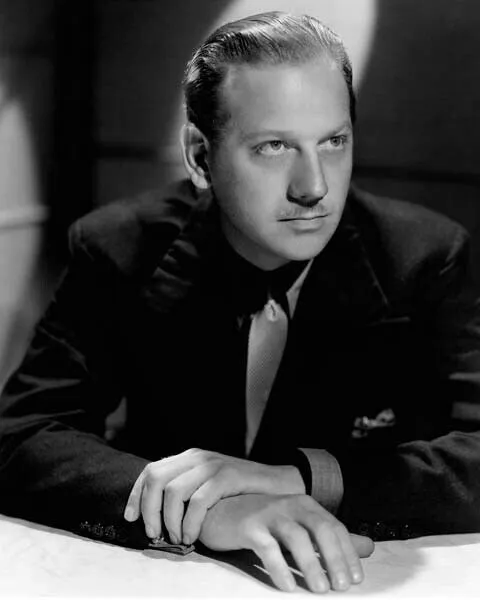
 Photo: Margaret Hamilton, via lh3.googleusercontent.com
The Massachusetts Institute of Technology had just won the contract to build the guidance computer for NASA's Apollo program, and they needed people who could think logically about complex problems. Hamilton's background in abstract mathematics made her a candidate, even though she had never written a line of computer code.
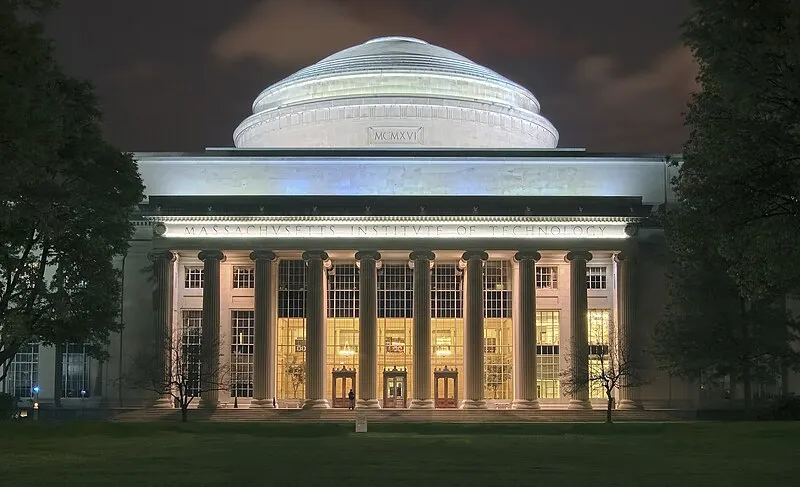 Photo of Massachusetts Institute of Technology, via Wikidata/Wikimedia Commons
"I was told I was going to be programming," she later recalled. "I asked what that meant, and they said I'd find out."
What she found was a field so new it didn't even have a name yet. The term "software engineering" wouldn't exist until Hamilton coined it herself.
Learning to Think Like a Machine
The Apollo Guidance Computer was unlike anything that had ever been built. It needed to be small enough to fit inside a spacecraft, reliable enough to work in the vacuum of space, and powerful enough to calculate trajectories that would determine whether astronauts lived or died.
Hamilton's job was to write the software that would control every aspect of the spacecraft's flight—from launch to lunar landing to the journey home. There were no textbooks, no established practices, no experts to consult. Every line of code was an experiment.
She approached programming like a mathematician approaching a proof: every instruction had to be logical, every possibility had to be considered, every error had to be anticipated. While other programmers focused on making their code work under normal conditions, Hamilton obsessed over what would happen when things went wrong.
"We had to be the computer," she said. "We had to think like the computer, because there was no room for error."
The Problem Nobody Else Saw Coming
As the Apollo program progressed, Hamilton became increasingly concerned about a scenario that her colleagues dismissed as unlikely: what would happen if the computer became overloaded during a critical phase of the mission?
Most engineers assumed that astronauts would follow procedures perfectly and that equipment would function as designed. Hamilton had a different perspective. She had spent countless hours testing the system, and she knew that unexpected situations were not just possible—they were inevitable.
She designed what she called "priority scheduling"—a way for the computer to focus on the most critical tasks when it couldn't handle everything at once. If the system became overloaded, her software would automatically shut down less important functions to keep the essential navigation and control systems running.
Her supervisors questioned whether such complexity was necessary. The additional code would take months to write and test, delaying other aspects of the program. Hamilton insisted it was essential.
"I kept saying, 'What if this happens? What if that happens?'" she remembered. "They'd say, 'That will never happen.' But I knew it would."
The Day Everything Went Wrong
On July 20, 1969, as Apollo 11 descended toward the lunar surface, Hamilton's worst-case scenario became reality. The computer began receiving unexpected signals from a radar system that was supposed to be turned off, overloading the processor with unnecessary data.
Alarm codes flashed on the astronauts' display: 1202, then 1201. Neither Neil Armstrong nor Buzz Aldrin had ever seen these errors during training. Mission Control had seconds to decide whether to abort the landing or trust the computer to keep working.
The alarms were Hamilton's priority scheduling system in action. Her software was automatically shutting down non-essential tasks to focus on the critical job of landing safely. The computer was overloaded, but it was handling the overload exactly as she had designed it to.
"Go for landing," Mission Control told Armstrong, trusting Hamilton's code to guide them safely to the surface.
Eleven minutes later, the Eagle touched down in the Sea of Tranquility with less than 30 seconds of fuel remaining. Hamilton's software had worked perfectly under the worst possible conditions.
The Engineer Who Didn't Exist
While the world celebrated the astronauts who walked on the moon, Hamilton returned to her laboratory to prepare for the next mission. Her contribution was largely invisible—software that worked so well that most people never had to think about it.
This invisibility was partly intentional. NASA's public relations focused on the heroic astronauts and the brilliant rocket engineers, not the programmers who wrote the code that made everything possible. But it was also cultural: in 1969, programming was still seen as a technical craft rather than an engineering discipline.
Hamilton spent years fighting for recognition that software development was as complex and critical as any other form of engineering. She insisted that programmers deserved the same respect as the engineers who designed rockets and spacecraft.
"Software was not taken seriously in those days," she said. "It was considered a kind of black art."
The Legacy in Every Line of Code
After Apollo, Hamilton founded her own software company, developing systems for air traffic control and other critical applications. She continued to advocate for rigorous software engineering practices, emphasizing the importance of designing systems that could handle unexpected situations.
The principles she developed for Apollo—priority scheduling, error detection, system reliability—became foundational concepts in modern software engineering. Every smartphone, every computer, every digital system that manages critical tasks uses techniques that Hamilton pioneered while preparing for humanity's first moon landing.
In 2016, President Barack Obama awarded Hamilton the Presidential Medal of Freedom, finally giving her the recognition she deserved for her contributions to space exploration and computer science.
The Mountain That Moved the Moon
Hamilton's story challenges our assumptions about who gets to shape history. She wasn't a rocket scientist or a test pilot—she was a math teacher who learned to program because her family needed the income. But her outsider's perspective and mathematical training gave her insights that more experienced engineers missed.
The girl from rural Michigan who never planned to work with computers became the programmer who made sure humans could safely travel to another world. Her code didn't just guide Apollo 11 to the moon—it brought the astronauts home again, completing a journey that depended as much on software as on rocket fuel.
In a program dominated by hardware and heroics, Hamilton proved that the most critical component might be invisible: the code that runs when everything else fails.